Configuration & Variant Management

Control product families, options, variants, configuration rules, and effectivity from one connected PLM environment, then generate accurate configured BOMs without duplicating product structures.

Configuration Control

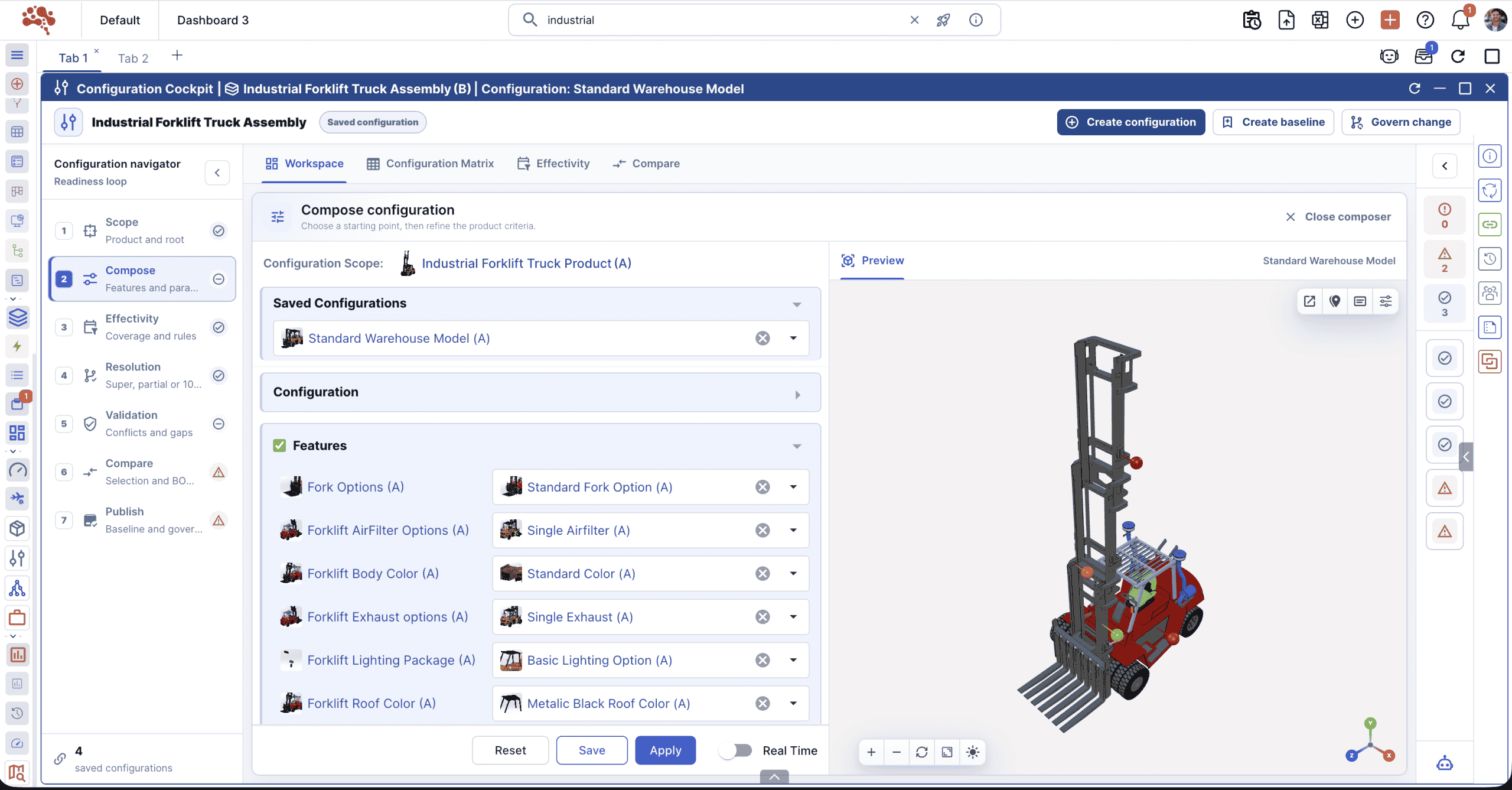
Control product variants from one connected configuration workspace.

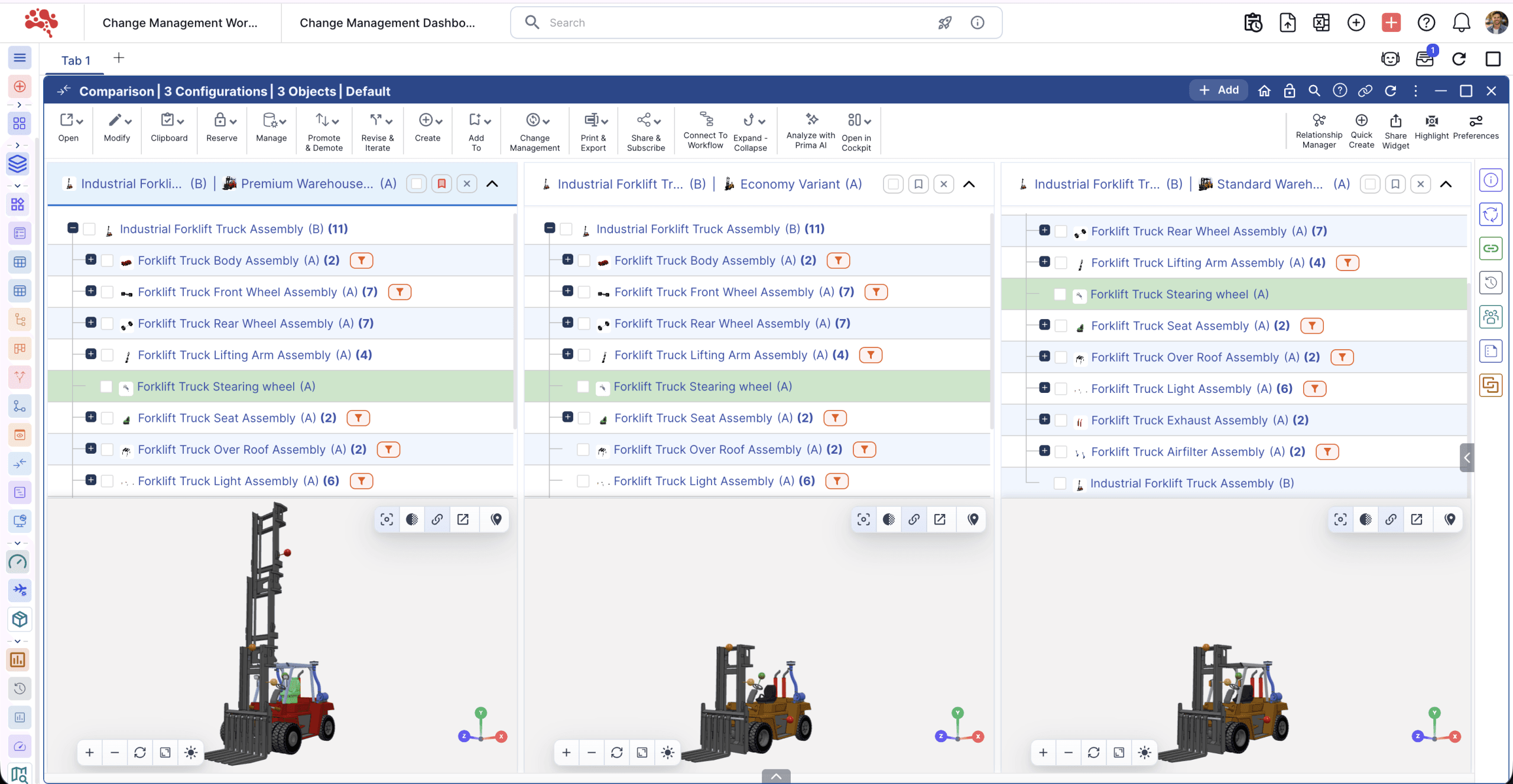
Nora IPLM helps teams compare product options, define effectivity rules, and open the exact configured structure needed for a customer, market, or model.

Instead of tracking variants in separate spreadsheets or duplicated BOMs, teams can validate choices, generate the right 100% BOM, and keep configuration decisions connected to the product structure.

The workflow keeps engineering, manufacturing, and downstream teams aligned around the same approved configuration data.

Configuration management overview
One source of truth
Rule-based accuracy
Generate accurate BOMs
Faster change execution
Better traceability
The Challenge with Static BOMs

Static BOMs Work for Simple Products. They Break Down When Products Become Configurable.

As product families grow, teams often create separate BOMs for every model, option, market, and customer requirement. This creates duplicate data, repeated engineering work, and higher risk of inconsistency.

01

Duplicate BOMs

Separate BOMs appear for similar product variations, creating repeated product data.

02

Manual Updates

Teams repeat updates across multiple product structures instead of changing shared logic once.

03

Invalid Combinations

There is no reliable way to validate option combinations before release.

04

Limited Traceability

Teams struggle to connect customer orders to the exact final BOM that was built.

05

Conflicting Data

Outdated or conflicting product data can move downstream unnoticed.

06

Slower Launches

Repeated engineering changes delay decisions, releases, and product launches.

One Source of Truth

One Source of Truth for Every Product Configuration

Nora IPLM brings product families, options, configuration rules, BOMs, documents, revisions, and engineering changes into one connected environment.

Engineering, manufacturing, procurement, quality, and operations teams work from the same controlled product definition instead of disconnected spreadsheets, duplicated BOMs, and manual checks.

  • Product scope: product families, models, options, features, and attributes.
  • Configuration logic: 150% BOM structures, effectivity conditions, rules, and dependencies.
  • Lifecycle context: parts, documents, CAD references, engineering changes, and approvals.
  • Downstream output: manufacturing-ready configured BOMs for production and procurement.
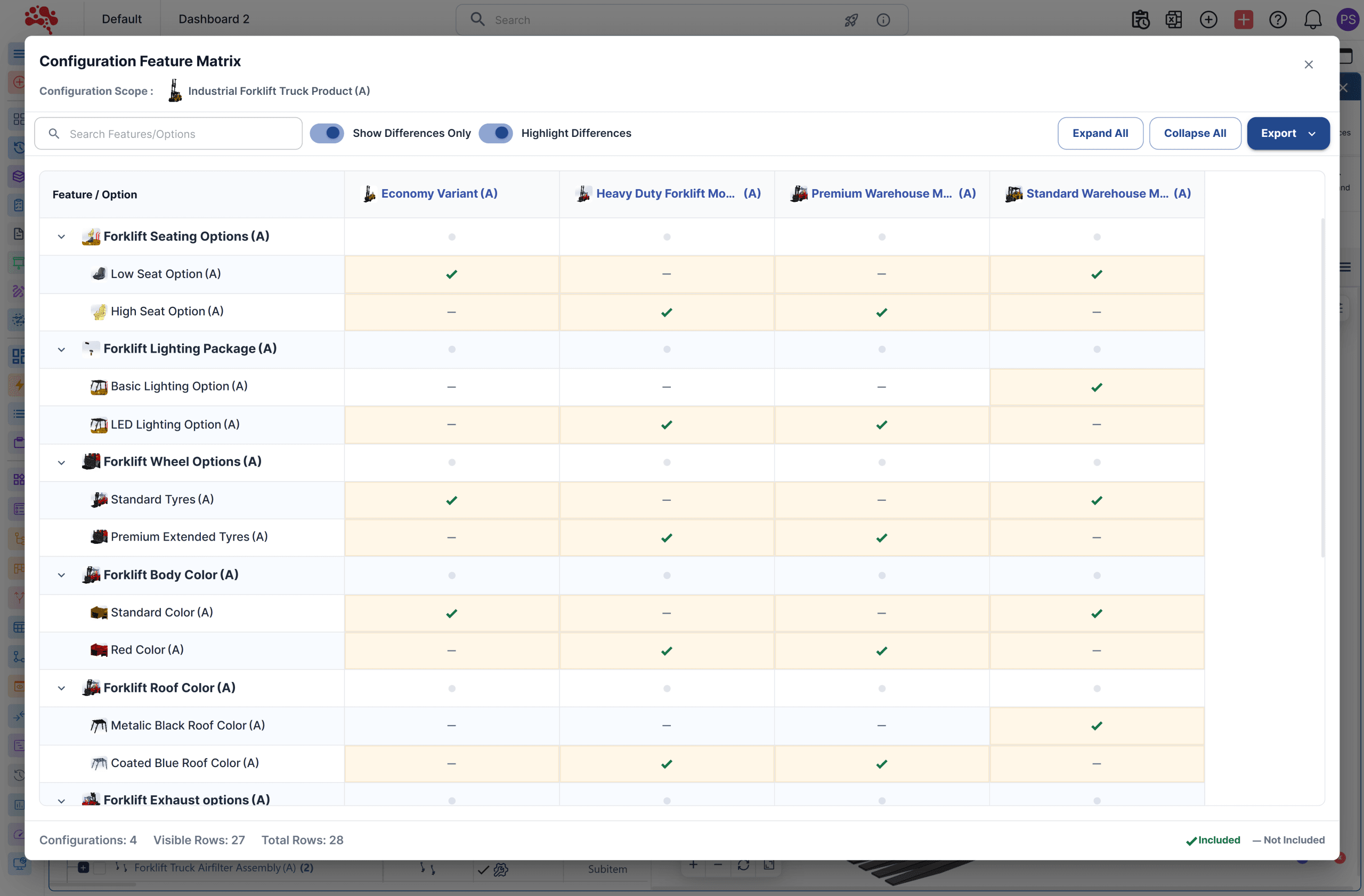
Centralized option control
Configuration feature matrix

Compare variants, highlight differences, and keep option decisions visible from one controlled view.

150% BOM to 100% Configured BOM

From 150% BOM to Accurate 100% Configured BOM

Nora IPLM uses a 150% BOM, also known as a Super BOM, to manage all possible components, modules, features, and options within a product family. Configuration rules then filter this complete structure to generate the exact 100% BOM required for a specific product variant.

01

Define the product family

Create a reusable structure for models, modules, and product lines.

02

Build the 150% BOM

Store all possible parts, features, assemblies, and options in one Super BOM.

03

Apply configuration rules

Use rules, dependencies, exclusions, and effectivity logic to control valid combinations.

04

Select the configuration

Choose customer, order, market, model, or feature-specific parameters.

05

Generate the 100% BOM

Produce the exact BOM needed for manufacturing, procurement, planning, and delivery.

Configuration and variant management
Configuration Management
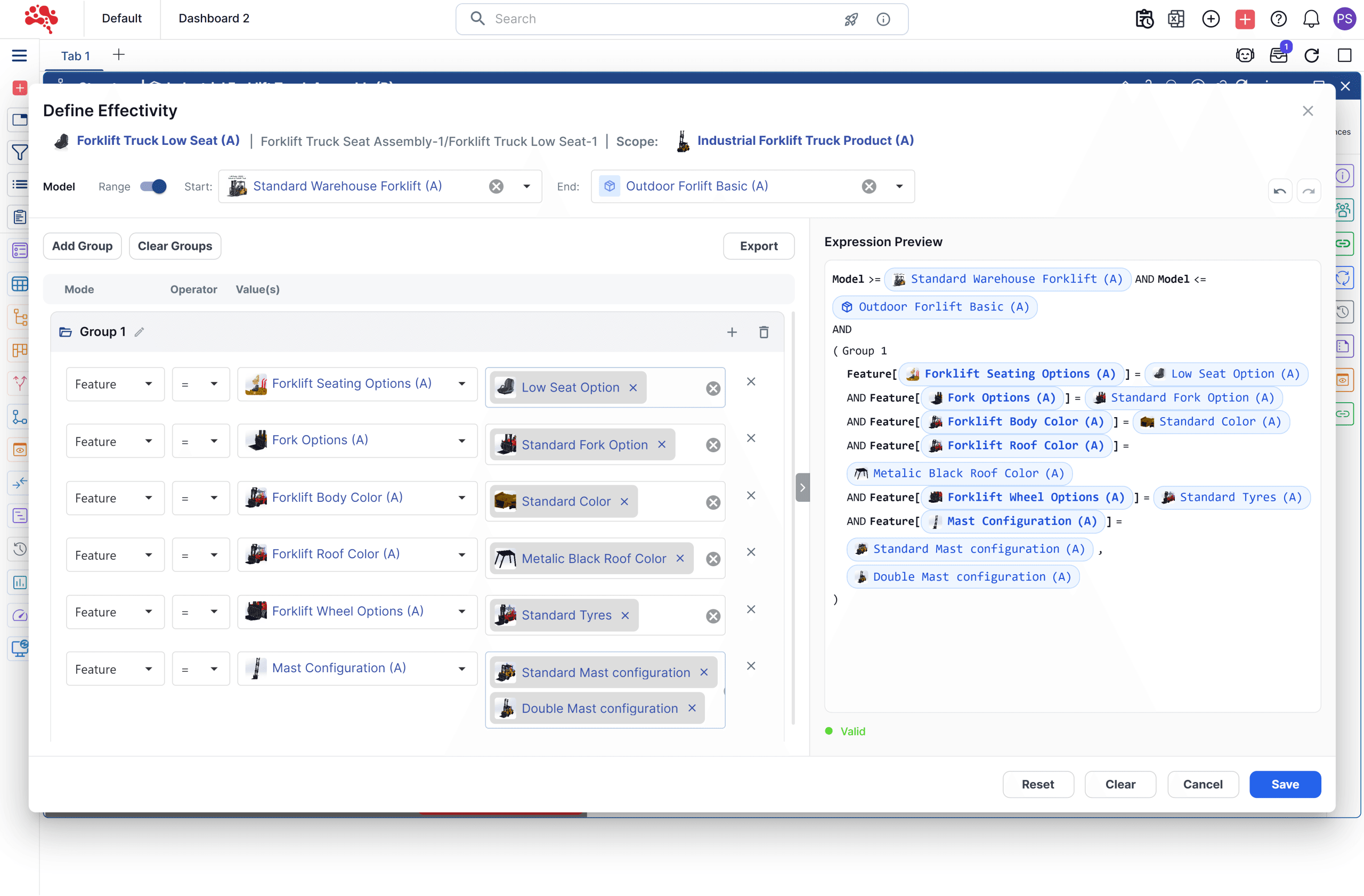
Effectivity rules
Effectivity Rules
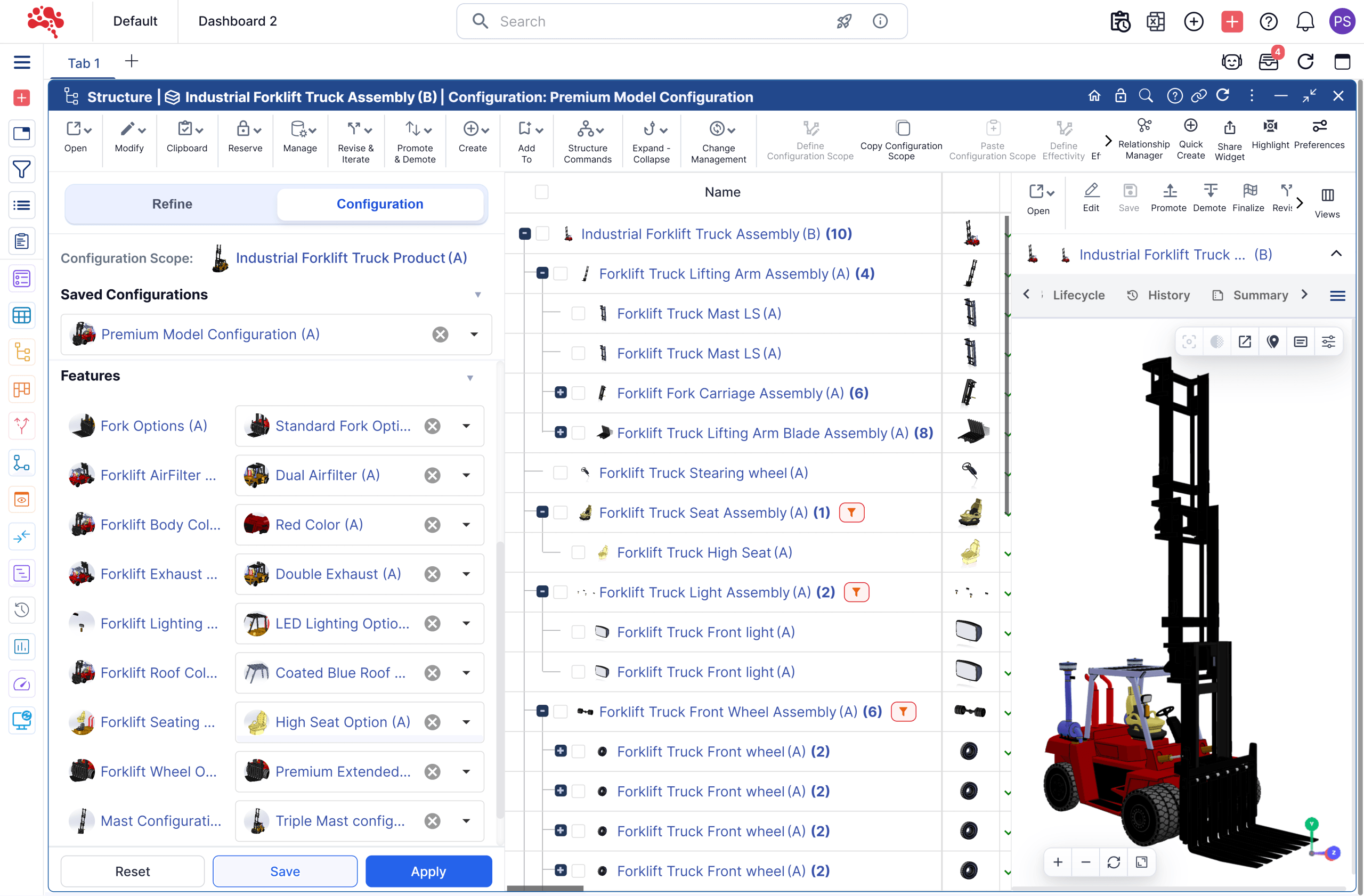
Configured BOM output
Configured BOM Output
Key Features

Configuration controls built into connected PLM workflows.

Centralized Option and Feature Control

Manage product options, attributes, modules, and variant logic in one controlled PLM environment. Keep engineering, manufacturing, and operations aligned around the same product definition.

150% BOM / Super BOM Management

Maintain all possible components and options in a single product family structure instead of creating duplicate BOMs for every variation.

Rule-Driven Product Configuration

Use configuration rules, dependencies, exclusions, and effectivity logic to determine which options and parts are valid for each product variant.

Automatic Configured BOM Generation

Generate accurate 100% BOMs for specific orders, models, markets, or customer requirements without manually rebuilding product structures.

Variant Traceability

Trace each configured product back to its selected options, source BOM, rules, revisions, changes, and manufacturing output.

Engineering Change Control

Apply product changes once to shared structures and rules, then keep all affected configurations aligned through controlled lifecycle workflows.

Manufacturing-Ready Product Data

Give manufacturing, procurement, and suppliers the exact configuration they need, reducing confusion caused by incomplete or duplicated BOMs.

Connected PLM Workflow

Link configuration logic with parts, BOMs, documents, CAD references, change requests, approvals, and product lifecycle states.

Static BOM vs Nora IPLM

Move from duplicated structures to controlled product logic.

Static BOM Approach Duplicated and manual
  • 01

    One BOM per variant

  • 02

    Repeated parts and structures

  • 03

    Manual updates across BOMs

  • 04

    Hard to validate combinations

  • 05

    Poor visibility across variants

  • 06

    More engineering effort

  • 07

    Higher risk of manufacturing confusion

Nora IPLM 150% BOM Approach Controlled and reusable
  • 01

    One Super BOM for the full product family

  • 02

    Reusable modules, options, and rules

  • 03

    Shared product logic updated once

  • 04

    Rules control valid configurations

  • 05

    Traceability from option to BOM

  • 06

    Faster configured BOM generation

  • 07

    Accurate 100% BOM output for downstream teams

Before and After Nora IPLM

Configuration work becomes structured, traceable, and repeatable.

Before

Without Structured Configuration Management

  • Duplicate BOMs for every product variation
  • Manual validation of product options
  • Repeated engineering changes
  • Disconnected spreadsheets and option lists
  • Limited traceability from order to BOM
  • Manufacturing teams receive unclear structures
After

With Nora IPLM

  • One controlled product family structure
  • Rule-based validation and dependencies
  • Shared logic updated through PLM workflows
  • Centralized configuration data
  • Full visibility from selected options to configured BOM
  • Manufacturing receives accurate 100% BOMs
Move Beyond Excel-Based Variant Tracking

Move Beyond Excel-Based Variant Tracking

Spreadsheets may work for a few product options, but they quickly become risky when variants, rules, revisions, and engineering changes increase.

Excel-based variant tracking often creates hidden complexity. Teams may not know which option list is current, which combinations are valid, or whether a change has been reflected across every affected product structure.

Nora IPLM replaces scattered spreadsheets and manually maintained BOMs with controlled, traceable configuration logic inside your PLM system.

Benefits

  • Controlled product option definitions
  • Rule-based validation instead of manual checking
  • Revision and lifecycle control
  • Change impact visibility
  • Connected BOM, document, and CAD data
  • Traceability from configuration decision to final product output
Business Benefits

Scale product customization without adding operational complexity.

Benefit 01

Reduce BOM Duplication

Avoid creating and maintaining separate BOMs for every product variation. Nora IPLM lets teams manage product complexity from one reusable structure.

Reduce BOM duplication
Use Cases

Built for Manufacturers Managing Complex Product Families

Nora IPLM Configuration & Variant Management is ideal for teams that manage:

Configurable products

Configurable machinery and equipment

Optional assemblies

Industrial products with optional assemblies

Regional variants

Equipment sold in different regional versions

Custom engineering

Customer-specific engineering requirements

Reusable platforms

Product platforms with reusable modules

Multi-discipline products

Mechanical, electrical, and software-driven product variations

Manufacturing handoff

Manufacturing BOMs derived from engineering BOMs

Frequent change

Products with frequent engineering changes across many variants

Excel replacement

Products currently managed through Excel-based option lists

Team-Specific Value

Designed for Every Team Involved in Product Configuration

01

Engineering Teams

Reduce duplicate structures and manage product logic from one controlled environment.

02

Manufacturing Teams

Receive accurate configured BOMs for each order, market, or product variant.

03

Product Managers

Control product families, platform strategies, option availability, and market-specific variants.

04

Operations Teams

Reduce downstream confusion across procurement, suppliers, production planning, and delivery.

05

Quality and Compliance Teams

Trace configurations, changes, approvals, and released product structures across the lifecycle.

06

Leadership Teams

Scale product variety while reducing rework, errors, and operational complexity.

Connected Product Lifecycle

Connect Configuration Logic with Your Product Lifecycle

Unlike standalone configurators or spreadsheet-based processes, Nora IPLM keeps configuration logic connected to the product data that matters.

Options, rules, BOMs, CAD references, documents, changes, approvals, and lifecycle states remain part of one connected PLM workflow. This helps teams make better decisions and ensures downstream teams work from accurate product information.

Configured BOM output connected to the product lifecycle
Why Choose Nora IPLM

Configuration control built for modern product teams.

PLM-Native Configuration Control

Nora IPLM manages configuration and variant logic directly inside the product lifecycle environment, keeping options, BOMs, changes, documents, and approvals connected.

Built for 150% BOM and Configured BOM Workflows

Create one Super BOM and automatically derive the correct 100% BOM based on selected rules, options, and conditions.

Simple Enough for Growing Teams

Nora IPLM helps teams move away from Excel-based variant tracking and manual BOM duplication without adding unnecessary enterprise complexity.

Connected from Engineering to Manufacturing

Configuration logic stays linked to product structures, lifecycle states, engineering changes, and manufacturing outputs.

Better Control Without Slowing Teams Down

Teams can scale product variety while maintaining accuracy, visibility, and lifecycle governance.

Visual Section Content

How Nora IPLM Configuration Works

Nora IPLM converts product complexity into a controlled configuration process. Teams define all possible options once, apply rules to filter valid combinations, and generate the exact BOM needed for each product variant.

Product Family 150% BOM / Super BOM Options + Features + Rules Configuration Selection 100% Configured BOM Manufacturing / Procurement / Delivery
Rule-based effectivity and product configuration

Ready to Simplify Product Complexity?

Stop managing product variants through duplicate BOMs, disconnected spreadsheets, and manual checks. With Nora IPLM, your team can define product options once, validate configurations with rules, and generate accurate BOMs for every variant.

Frequently Asked Questions

What is Configuration & Variant Management in PLM?
Configuration & Variant Management in PLM is the process of managing product families, options, rules, and variations in a controlled product lifecycle system. It helps teams create accurate product variants without duplicating BOMs or manually validating every combination.
What is the difference between product configuration and variant management?
Product configuration focuses on selecting valid combinations of options, features, and parts based on rules. Variant management focuses on controlling the different product versions that result from those combinations. In PLM, both work together to help teams manage product complexity.
What is a 150% BOM?
A 150% BOM, also called a Super BOM, contains all possible components, modules, features, and options for a product family. Configuration rules are then used to filter the Super BOM and generate the correct 100% BOM for a specific product variant.
What is a 100% configured BOM?
A 100% configured BOM is the exact bill of materials required for a specific product, order, market, or customer configuration. It includes only the parts and options that apply to that final product.
How does Nora IPLM reduce BOM duplication?
Nora IPLM reduces BOM duplication by allowing teams to manage all product options in one Super BOM instead of creating separate BOMs for every variant. Rules determine which parts apply to each configuration.
Can Nora IPLM manage customer-specific product variants?
Yes. Nora IPLM can manage customer-specific, order-specific, market-specific, and model-specific variants using configuration rules and option logic.
How do configuration rules work in Nora IPLM?
Configuration rules control which options, features, and components are valid for a specific product variant. These rules help prevent invalid combinations and ensure that the generated BOM is accurate.
Why is Configuration & Variant Management important for manufacturers?
It helps manufacturers offer more product choices while reducing engineering effort, avoiding duplicate BOMs, preventing configuration errors, and improving traceability from design to manufacturing.
This is a staging environment