Idea and Innovation Management.
From ideas to product innovation.
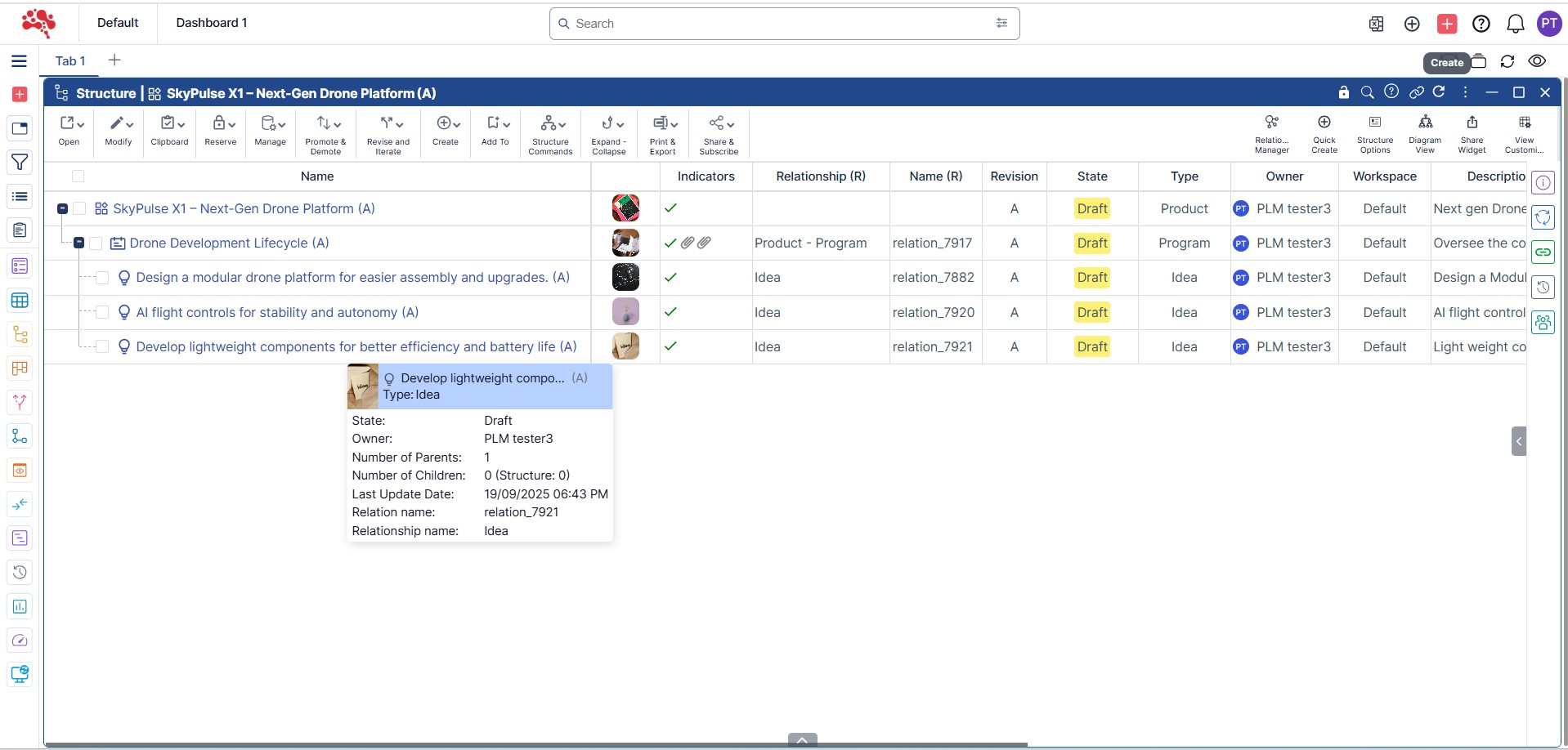
Capture, evaluate, and prioritize product ideas in one connected workspace. Nora IPLM links innovation with requirements, projects, documents, BOMs, and engineering workflows so promising concepts move into product development with their context intact.
Idea and innovation management.
From concept to execution.
Bring ideas into a structured innovation pipeline. Explore how Nora IPLM helps teams capture concepts, define requirements, connect product information, and visualize relationships before moving approved ideas into engineering execution.
Capture the concept.
Keep the context.
Collect product ideas, improvement opportunities, and customer feedback. Classify concepts with structured attributes, names, and ownership so teams can find, compare, and refine them.
Define the need.
Shape the solution.
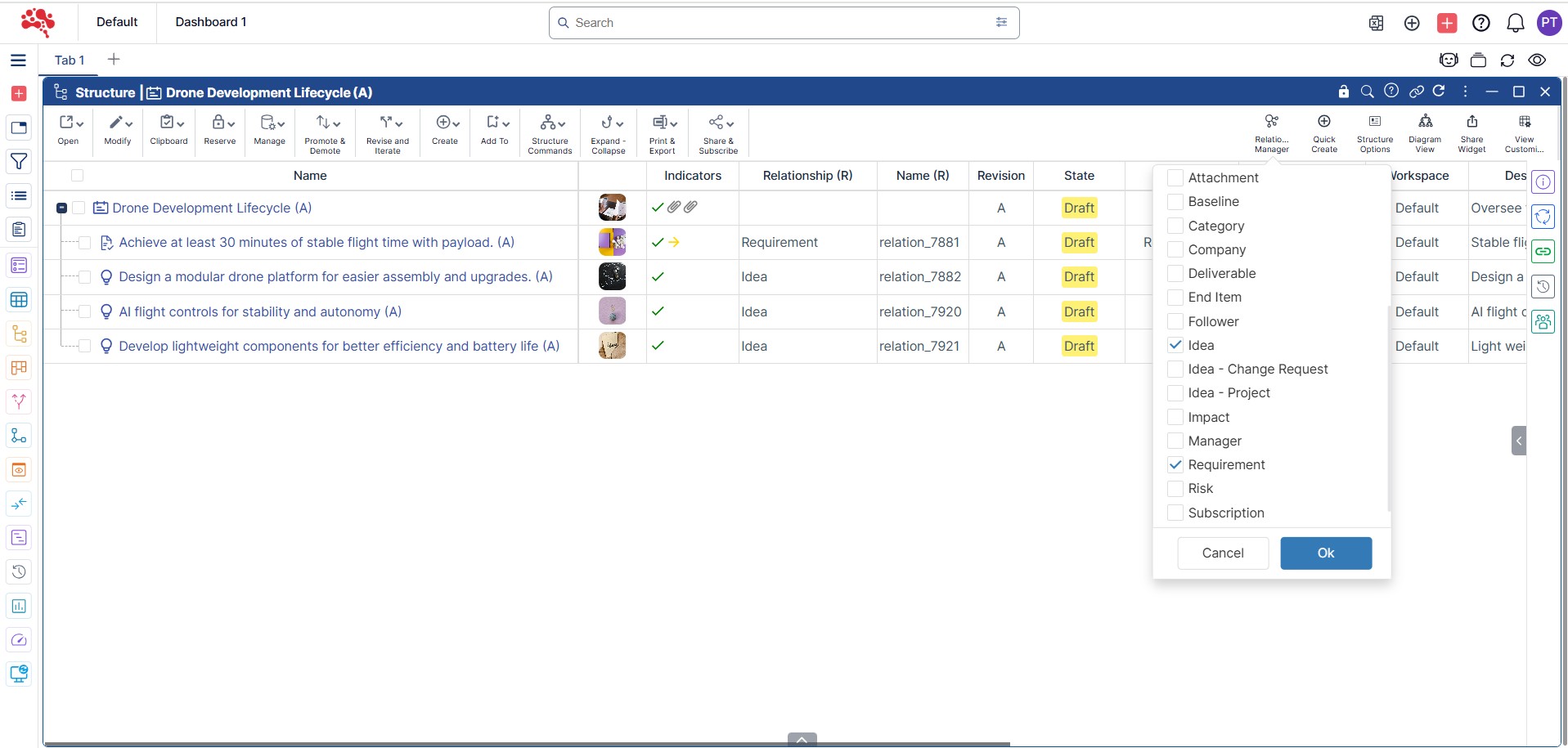
Evaluate and prioritize promising ideas, then translate approved concepts into clear product requirements. Connect early innovation decisions with the engineering work they initiate.
Link every idea.
Trace the product.
Associate ideas with designs, documents, items, BOMs, and related product data. Preserve the reasoning behind a concept as it advances into product development and change workflows.
See the connections.
Make informed decisions.
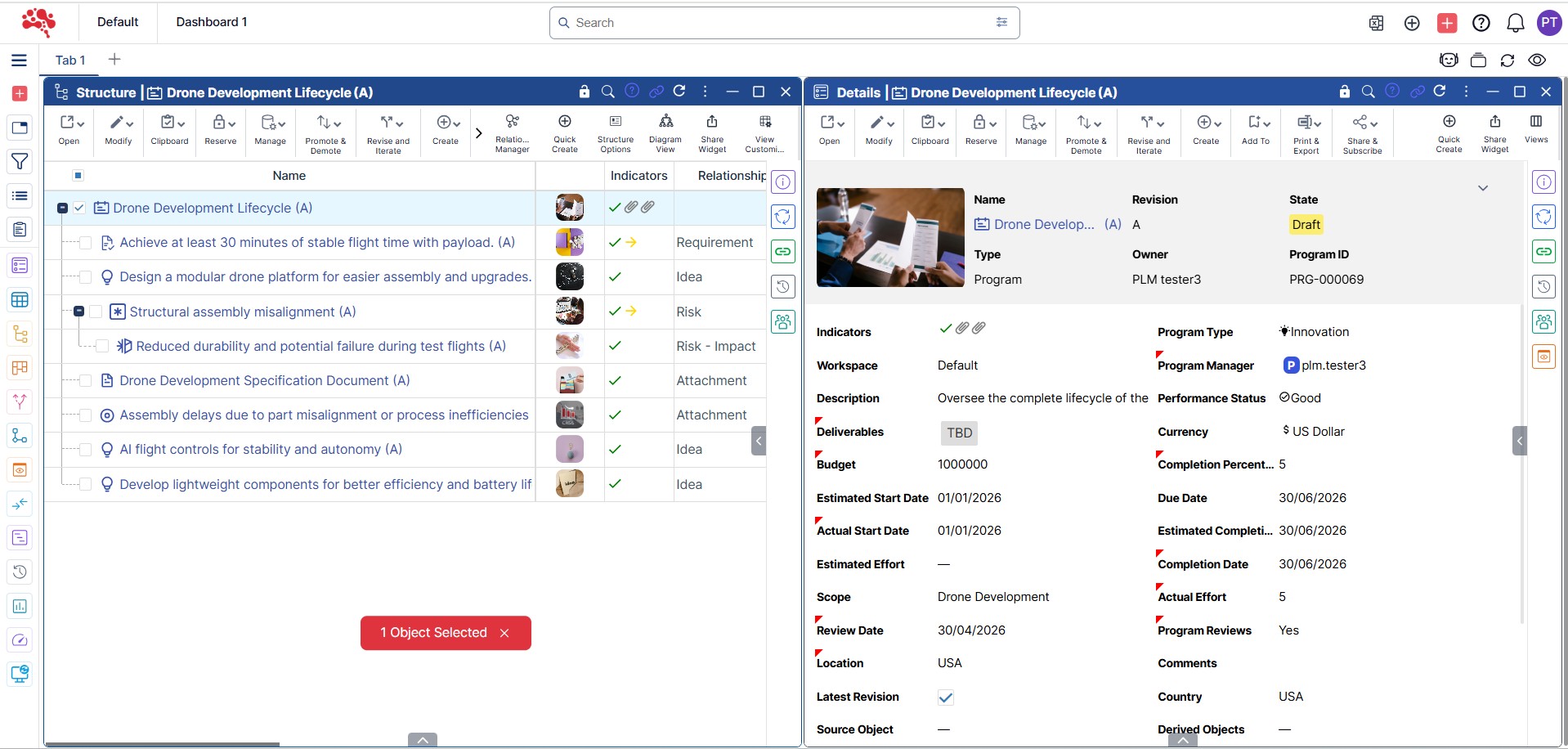
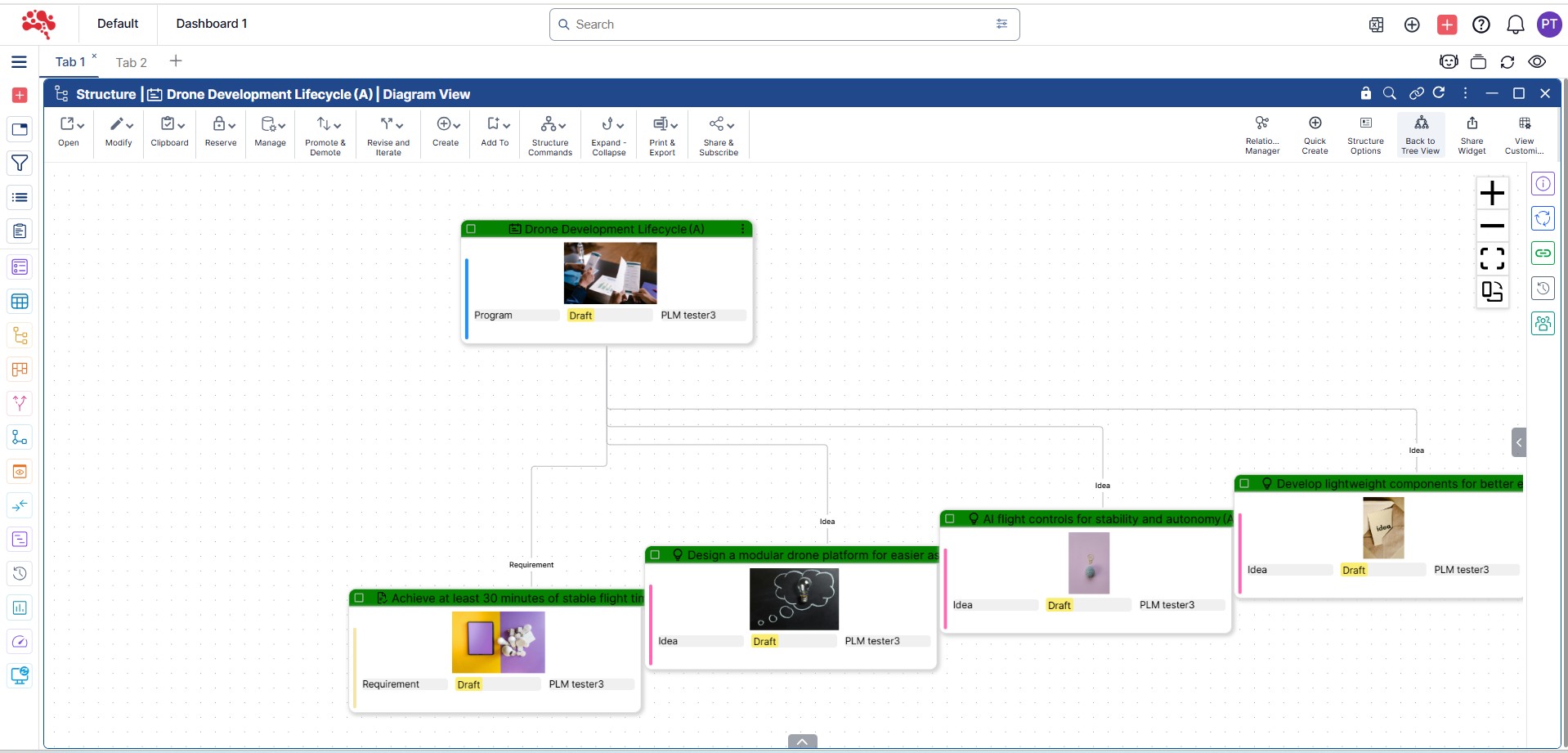
Use hierarchical widgets and structured product views to understand how ideas, products, and documents relate. Give teams a clearer view of innovation progress and downstream dependencies.
Manage the ideas.
Connect the product work.
Idea and innovation management is more effective when concepts remain linked to product lifecycle management. Nora IPLM brings idea capture, evaluation, requirements, documents, and product relationships together so information does not disappear between discovery and engineering execution.
The innovation pipeline.
One connected workspace.
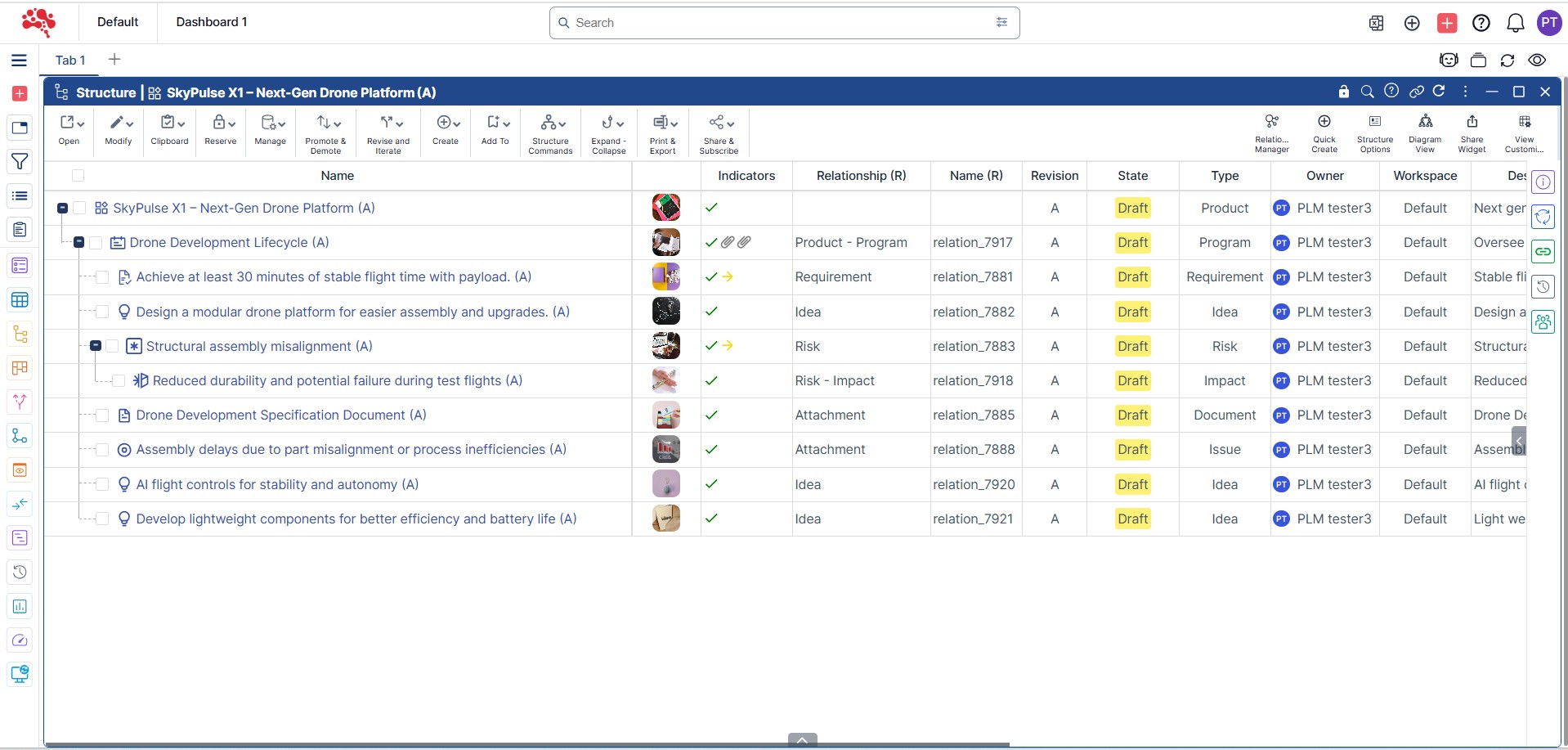
Capture early ideas and customer needs, classify and evaluate opportunities, and connect selected concepts to requirements, projects, documents, and product structures. Maintain ownership, context, and traceability from ideation through development.
Capture and classify.
Build a stronger idea pipeline.
Record ideas quickly and organize them using names, attributes, categories, documents, and relationships so opportunities can be reviewed consistently.
Idea capture and classification
Structure new product concepts, improvement proposals, and customer-driven suggestions in a shared environment. Make ideas easier to discover, compare, and develop.
Evaluate and prioritize.
Focus on valuable opportunities.
Compare feasibility, strategic fit, expected value, and technical impact before selecting concepts for product development.
Idea evaluation and prioritization
Use a repeatable process to review incoming ideas, focus resources on promising concepts, and keep the reasons behind innovation decisions visible.
Connect requirements.
Turn concepts into plans.
Translate approved ideas into requirements and link them with product projects, documents, and engineering workflows.
Requirements and product development
Create continuity from opportunity discovery to requirements definition and development execution, reducing disconnected handoffs between teams.
Visualize relationships.
Preserve the digital thread.
Use product relationships and hierarchical widgets to see how ideas connect with items, designs, documents, configurations, and BOMs.
Connected product information
Explore the dependencies between early concepts and downstream engineering records, keeping decisions and product context together throughout the lifecycle.
Disconnected idea lists vs. PLM-connected innovation.
Scattered ideas and handoffs
Ideas stored in spreadsheets or standalone collaboration tools can lose context as teams move from review into requirements, projects, and engineering development.
Connected innovation management
Nora IPLM connects idea records with requirements, product data, documents, projects, and lifecycle workflows so teams can follow concepts through execution.
Idea management in action.
Explore the innovation workspace.
Explore how ideas can be captured and organized in Nora IPLM. See the product ideation workspace, then follow the connected process from evaluation and requirements to engineering execution below.
From the first idea.
To product development.
Capture and organize concepts, evaluate their potential, and connect approved ideas to requirements and engineering work. Follow three connected stages of idea and innovation management.
Bring every promising concept into view
Capture product ideas, improvement opportunities, and customer feedback in a structured workspace. Classify ideas, attach context and documents, and organize them with clear attributes and relationships so teams can review them consistently.

Select ideas and clarify what to build
Review feasibility, expected value, and technical considerations to prioritize the most relevant concepts. Translate approved ideas into product requirements and connect the decisions to product planning and engineering activities.

Keep the original opportunity linked to the product
Associate approved ideas with items, product structures, documents, projects, and engineering workflows. Visualize dependencies and preserve the reasoning behind the concept as the product progresses toward release.

Innovation teams.
A shared path to execution.
Product managers, engineers, designers, and cross-functional teams can turn scattered opportunities into structured product initiatives. Connect customer needs and technical ideas to requirements, projects, and lifecycle decisions.
New product concepts
Capture and evaluate ideas for new products, platforms, or product families before committing to development.
Product improvements
Organize suggestions that improve reliability, performance, usability, manufacturability, or cost.
Customer-driven innovation
Connect customer feedback and market needs with requirements, product decisions, and development work.
Engineering and sustainability
Review technical innovations and sustainability opportunities with the relevant product data and engineering context.
Example: turning customer feedback into a product initiative.
A product team identifies repeated customer demand for a lighter industrial product. The opportunity is captured as an idea, enriched with customer feedback, and evaluated for technical feasibility and expected value. After approval, the team defines requirements and links the concept to a development project, product records, and engineering information. The original customer need remains traceable through execution.
Get to know
Idea and Innovation Management.
Answers to common questions about idea capture, evaluation, requirements, innovation pipelines, and connected product development.
What is idea management?
Idea management is the structured process of capturing, organizing, evaluating and prioritizing ideas so teams can identify which concepts should move forward.
What is innovation management?
Innovation management is the broader process of turning opportunities and ideas into valuable outcomes through evaluation, prioritization, development and execution.
What is the difference between idea management and innovation management?
Idea management focuses primarily on the idea pipeline, while innovation management connects selected ideas with validation, planning, product development and execution.
Why should idea management be connected to PLM?
Connecting ideas with PLM helps preserve context as concepts move into requirements, projects, product structures and engineering workflows.
How does Nora IPLM help teams prioritize ideas?
Teams can organize ideas using structured attributes, classifications, relationships and review criteria so concepts can be compared and evaluated more consistently.
Can ideas be linked to requirements and products?
Yes. Ideas can be connected to requirements, product records, documents, projects and other lifecycle information so the original innovation context remains visible during development.
What is an innovation pipeline?
An innovation pipeline is the structured flow of ideas from initial capture through review, evaluation, prioritization, validation and execution.
How does idea management support product development?
It creates a controlled transition from early concepts into requirements, projects and engineering work, helping teams move from inspiration to execution without losing context, including the product structures governed through BOM management.
Who uses idea and innovation management software?
Product managers, innovation teams, engineering leaders, designers, project teams and cross-functional product development teams can all benefit from structured idea and innovation management.
Bring ideas to life.
Keep innovation connected.
Capture and evaluate product ideas, define requirements, and connect promising concepts to engineering execution. Start your free trial or explore the Nora IPLM live sandbox.
Talk to us about idea and innovation management