Nora IPLM Lab. Building the next chapter of product work.
A closer look at what we’re developing across engineering, manufacturing, and product data. Seven workstreams. One connected PLM foundation.
 Preview unavailable. Open the full-size image.
Engineering clarityChanges, structures, and configurations
Manufacturing contextProduct definitions and process planning
Practical AIAssistance grounded in product data
Seven areas.
Real product challenges.
Each development starts with a workflow worth improving. Explore the intended capabilities, the product context behind them, and who they could help.
Change Cockpit
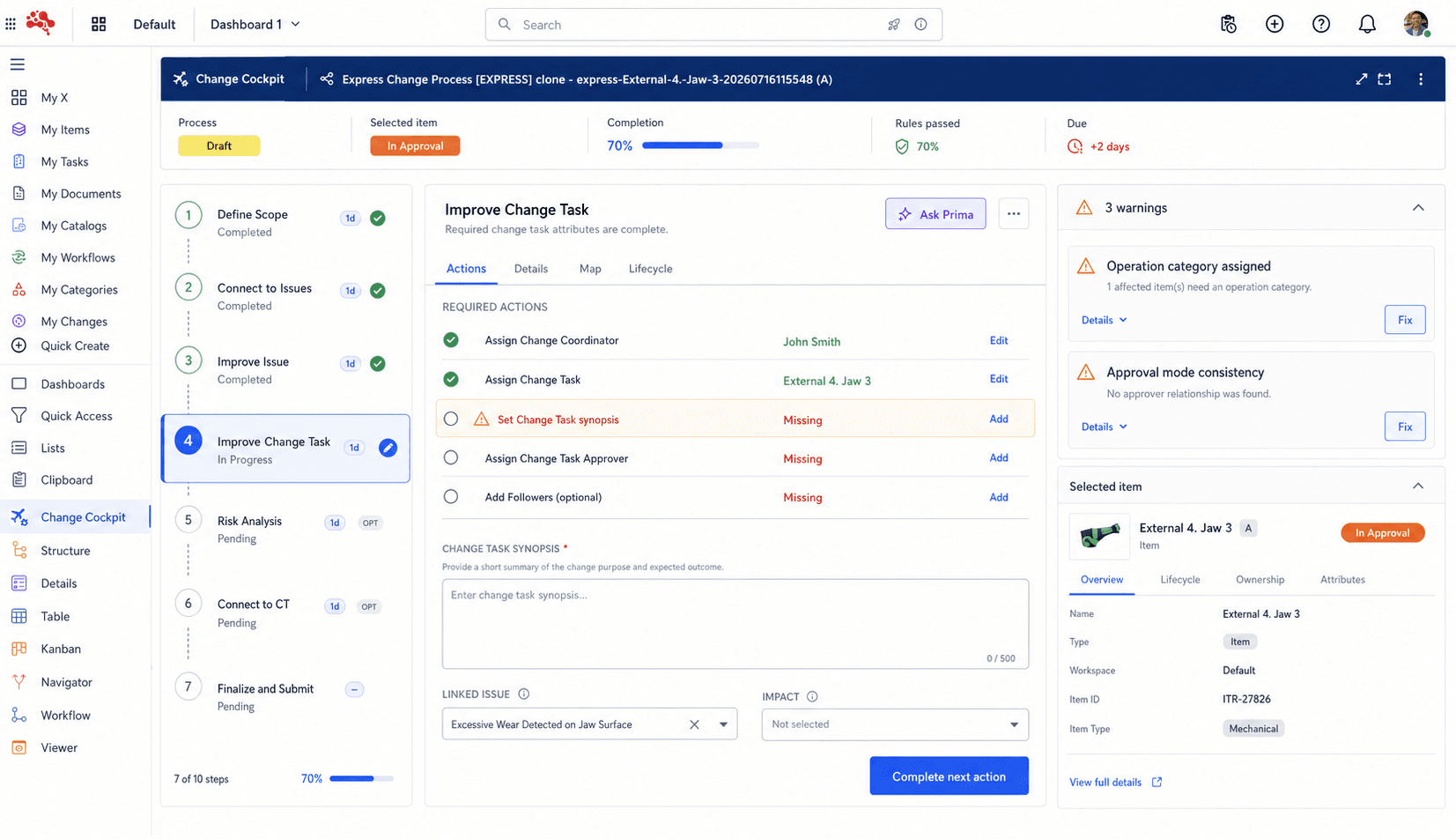
Bring affected objects, decisions, approvals, and readiness checks into one engineering change review.
- Review ECO and ECR impacts in connected context
- Keep ownership, decisions, and approvals traceable
- Spot downstream manufacturing and service risks
 Preview unavailable. Open the full-size image.
Potential outcome: Faster reviews, stronger governance, and fewer late change impacts.
Workflow details and intended users
Engineering change reviews become difficult when affected BOMs, documents, requirements, manufacturing processes, and service records are spread across separate views. Reviewers may approve an ECO or ECR without a complete picture of downstream risk.
Nora’s product team is actively developing the Change Cockpit as an engineering change management workspace that brings impact, ownership, decisions, approvals, and implementation readiness into one governed review.
What we’re working toward
- Accelerate ECO and ECR reviews with connected product context
- See affected BOMs, documents, requirements, processes, and service data before release
- Capture traceable decisions, ownership, approvals, and risk signals
- Reduce downstream manufacturing, quality, and service surprises
- Coordinate engineering, manufacturing, quality, and service teams
- Best for
- Engineering leaders, change managers, quality teams, and PLM administrators.
- Potential outcomes
- Faster reviews, stronger governance, and fewer late change impacts.
Selective Structure Clone
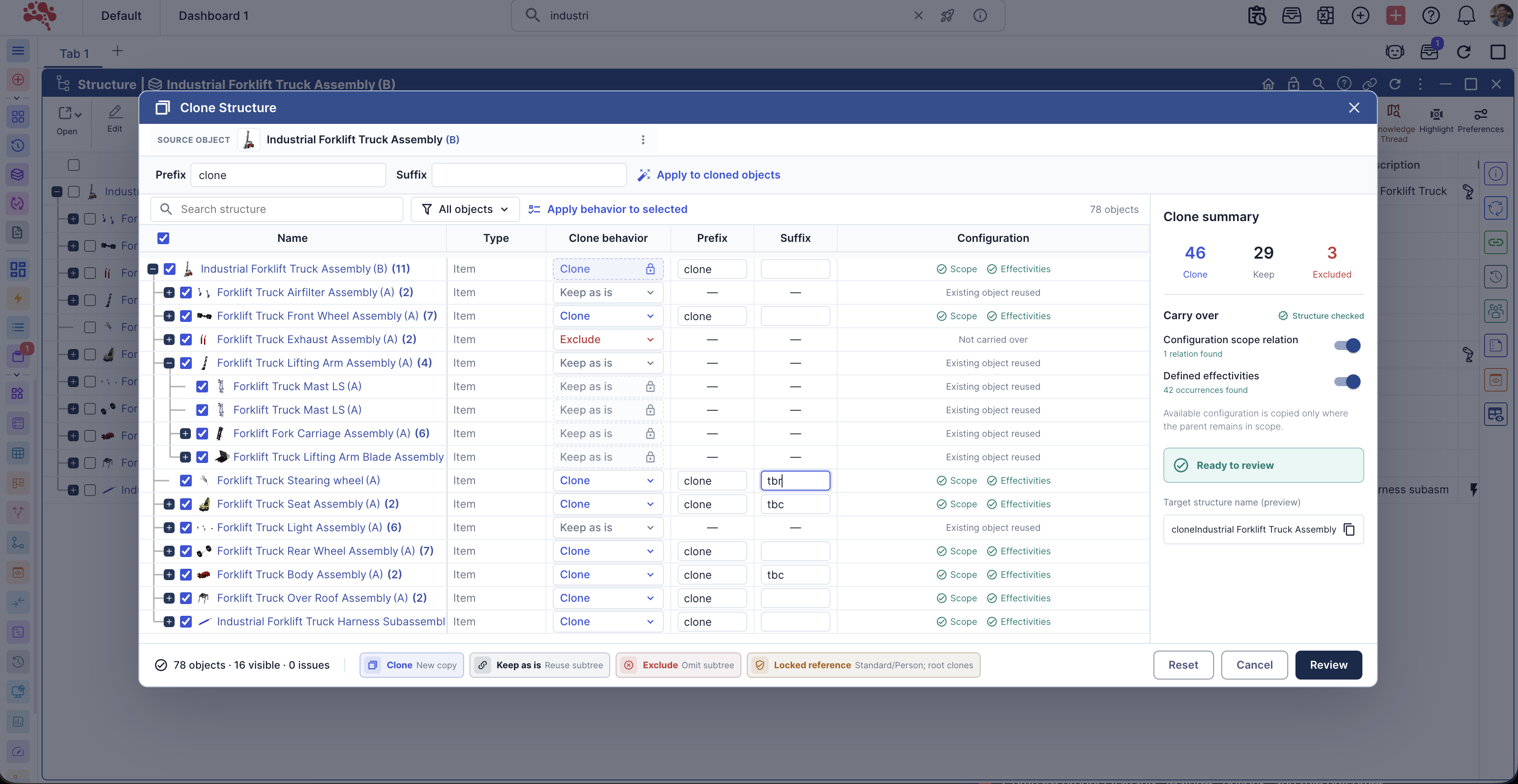
Choose what to clone, keep as a reference, or exclude when creating a new product structure.
- Control reuse by object or subtree
- Preview the resulting structure before creation
- Preserve approved references and configuration context
 Preview unavailable. Open the full-size image.
Potential outcome: Faster setup, more precise reuse, and cleaner governed structures.
Workflow details and intended users
Creating a new product or variant from an existing structure can save time, but uncontrolled copying creates duplicate product data, unclear ownership, and disconnected lifecycle records.
The team is actively designing Selective Structure Clone to support controlled product structure reuse. Teams would be able to choose whether each object is cloned, kept as an existing reference, or excluded; carry over approved configuration context; and review the resulting structure before creation.
What we’re working toward
- Set up new products, programs, and variants faster
- Choose clone, keep-as-is, or exclude behavior by object or subtree
- Reuse approved objects without duplicating product data
- Preview the target structure, configuration scope, and effectivity carryover
- Apply consistent product-data governance to reuse workflows
- Best for
- Product data managers, engineering teams, and configurable product businesses.
- Potential outcomes
- Faster setup, more precise reuse, and cleaner governed structures.
MBOM Cockpit
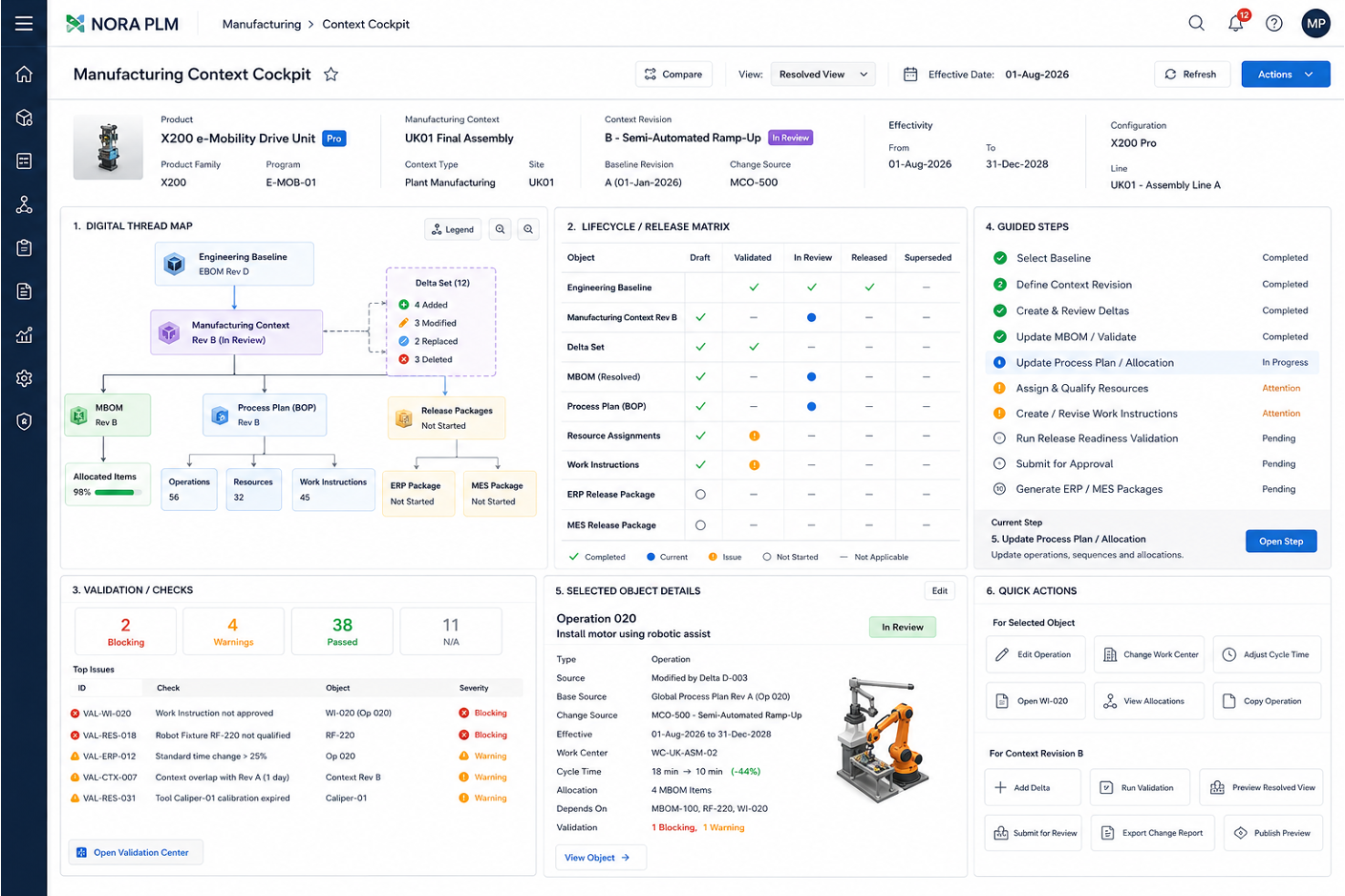
Compare engineering and manufacturing definitions, resolve differences, and review release readiness together.
- Review EBOM-to-MBOM changes across revisions
- Connect process plans, resources, and work instructions
- Surface blocking checks before approval
 Preview unavailable. Open the full-size image.
Potential outcome: Cleaner EBOM-to-MBOM alignment, earlier issue detection, and stronger release readiness.
Workflow details and intended users
Turning an engineering definition into a build-ready manufacturing structure requires more than copying an EBOM. Teams need to manage plant context, item allocations, lifecycle states, effectivity, resource dependencies, and readiness checks together.
At Nora IPLM Lab, we are developing the MBOM Cockpit as a governed workspace for creating and validating manufacturing contexts, reviewing EBOM-to-MBOM deltas, and coordinating release readiness.
What we’re working toward
- Compare engineering baselines with manufacturing contexts and resolved MBOMs
- Track added, modified, replaced, and deleted items across revisions
- Coordinate MBOMs, process plans, resources, work instructions, and ERP or MES packages
- Surface blocking checks and warnings before approval
- Preserve lifecycle, effectivity, and change traceability
- Best for
- Manufacturing engineering, industrialization, operations, and PLM teams.
- Potential outcomes
- Cleaner EBOM-to-MBOM alignment, earlier issue detection, and stronger release readiness.
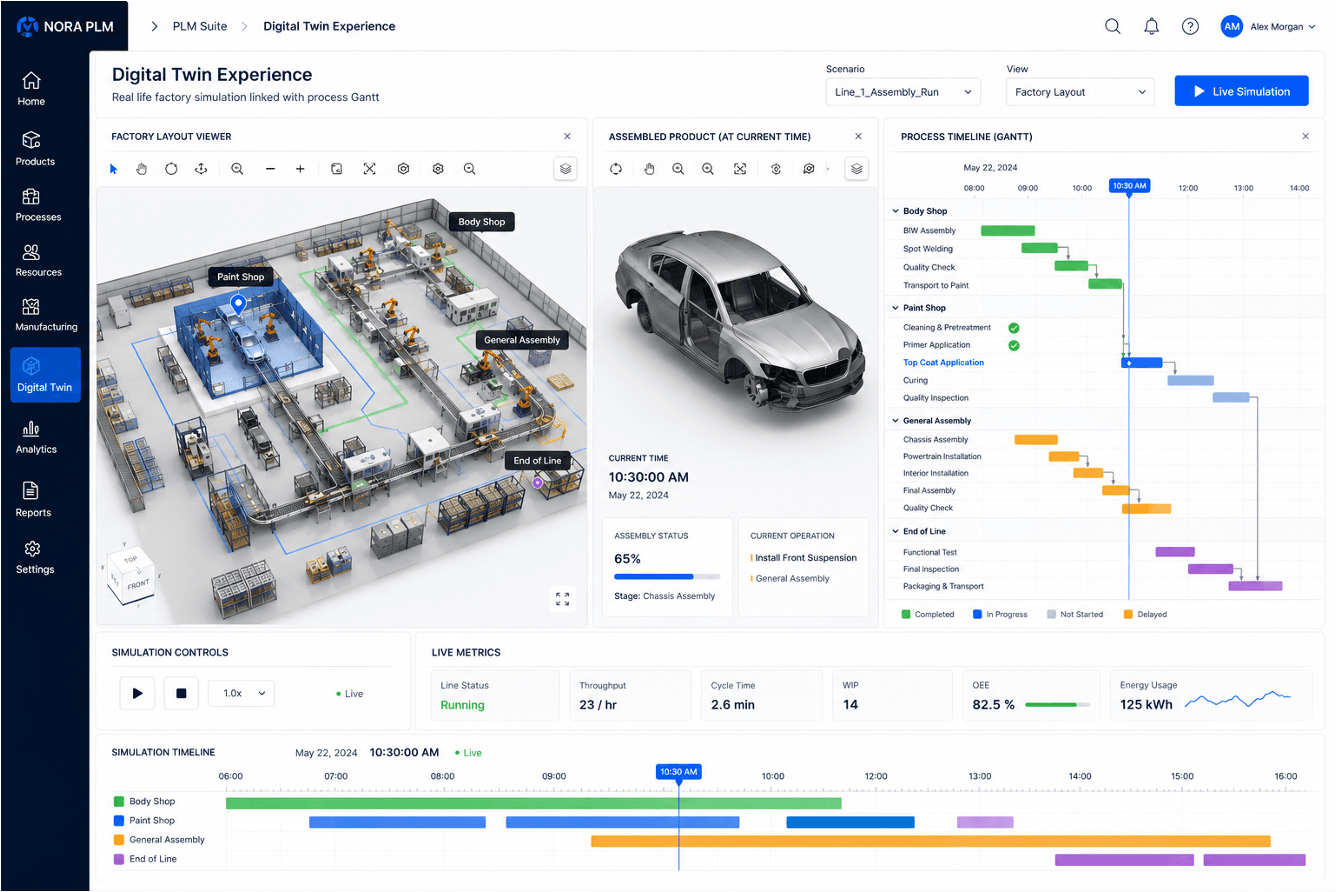
Manufacturing process management
Connect the manufacturing definition to operations, resources, instructions, and production scenarios.
- Plan operations, sequences, and work centers
- Allocate resources and link instructions to the MBOM
- Explore cycle times and production constraints
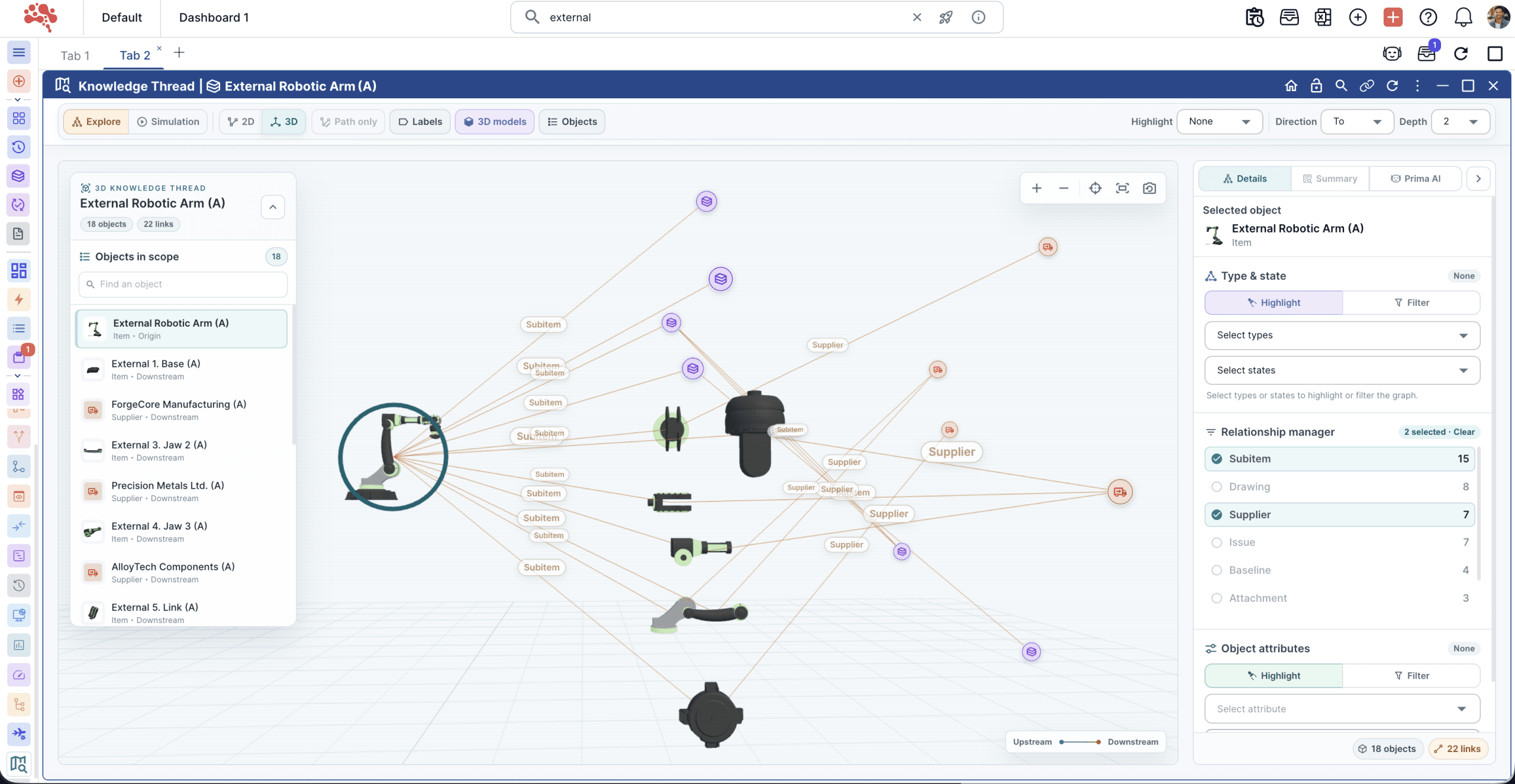
 Preview unavailable. Open the full-size image.
Potential outcome: Better process planning, faster production validation, and fewer shop-floor surprises.
Workflow details and intended users
Once an MBOM defines what will be built, teams still need to define how it will be built. Operations, sequences, work centers, resources, instructions, cycle times, and production constraints must remain connected to product and change context.
At Nora IPLM Lab, we are developing Manufacturing Process Management to plan the bill of process, allocate resources, simulate production scenarios, and evaluate the effect of engineering or manufacturing changes before release.
What we’re working toward
- Create and manage operations, sequences, work centers, tools, and resources
- Link process plans and work instructions directly to the MBOM
- Evaluate production scenarios through digital-twin simulation
- Review cycle time, throughput, WIP, energy use, and production constraints
- Understand how product changes affect manufacturing execution
- Best for
- Manufacturing engineers, process planners, industrial engineers, and operations teams.
- Potential outcomes
- Better process planning, faster production validation, and fewer shop-floor surprises.
Knowledge Thread
Explore the upstream and downstream relationships around a product object, with source context in view.
- Follow dependencies across product objects
- Filter relationships by type, state, and attributes
- Give AI assistance traceable source context
Preview unavailable. Open the full-size image.Potential outcome: Faster relationship discovery, clearer impact analysis, and stronger digital-thread visibility.
Workflow details and intended users
Critical product context extends beyond a BOM tree. Items connect to suppliers, drawings, issues, baselines, attachments, changes, processes, configurations, and service records, yet these pathways can be difficult to follow across separate views.
Nora is building Knowledge Thread as an interactive, relationship-aware workspace for exploring upstream and downstream product context. It is designed to strengthen discovery, impact analysis, and AI-assisted PLM with visible, governed source relationships.
What we’re working toward
- Explore upstream and downstream relationships from the active product object
- View items, suppliers, drawings, issues, baselines, and attachments together
- Highlight or filter relationships by object type, lifecycle state, and attributes
- Reveal change pathways, dependencies, risks, and reuse opportunities
- Give Nora Prima AI traceable product context for stronger explanations
- Best for
- Product-data, change-management, supplier-quality, and digital-transformation teams.
- Potential outcomes
- Faster relationship discovery, clearer impact analysis, and stronger digital-thread visibility.
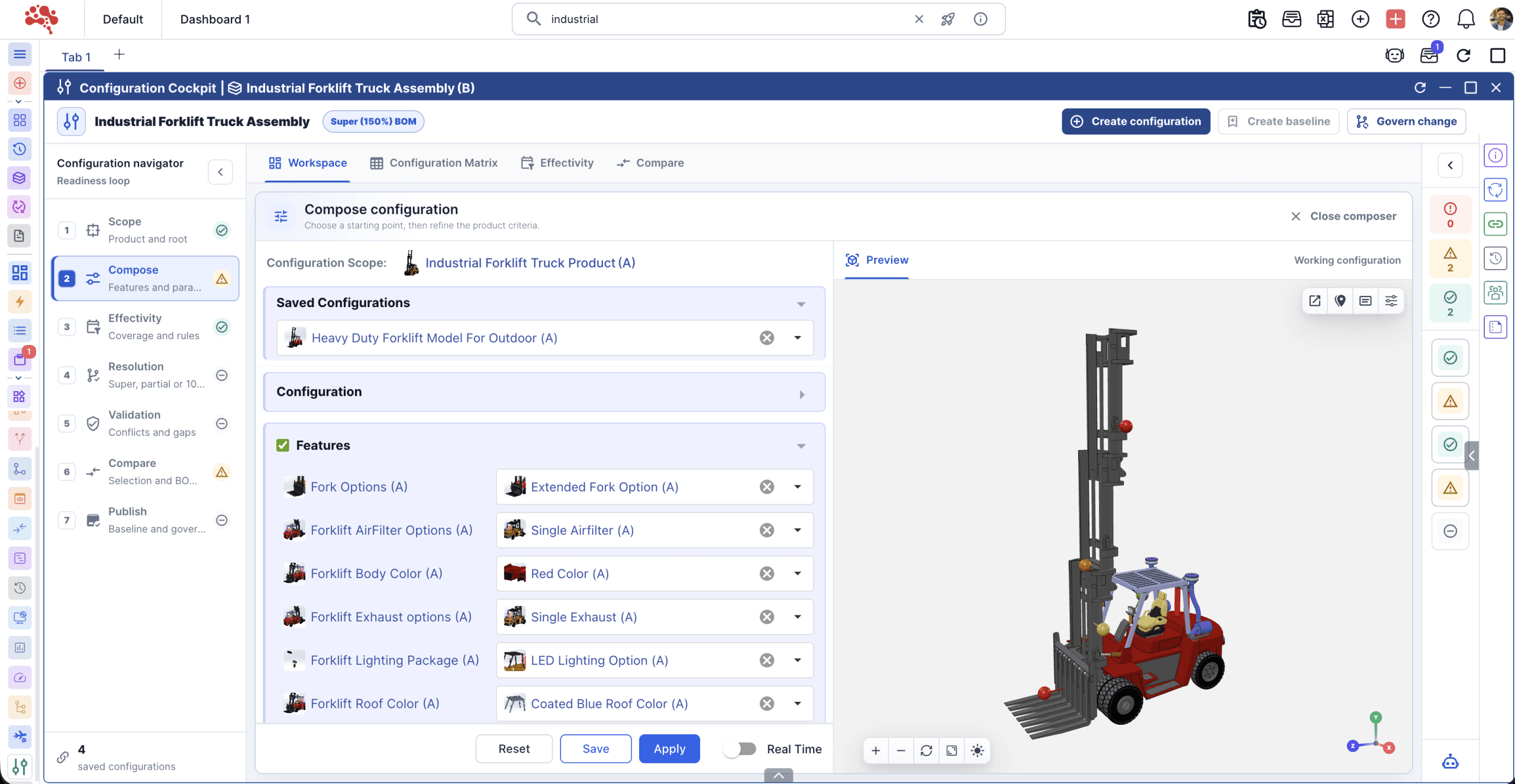
Configuration Cockpit
Validate options, rules, and effectivity to resolve a specific 100% BOM from a governed 150% definition.
- Compare variants and validate option rules
- Resolve order-specific product structures
- Maintain lifecycle and configuration traceability
 Preview unavailable. Open the full-size image.
Potential outcome: More accurate configurations, less duplication, and stronger variant control.
Workflow details and intended users
Configurable product families introduce complex option rules, effectivity conditions, market requirements, and order-specific structures. Duplicating a product definition for every variation increases maintenance effort and weakens traceability.
The team is actively developing the Configuration Cockpit as a focused product configuration management workspace for comparing variants, validating rules, reviewing effectivity, and resolving an accurate 100% BOM from governed 150% BOM logic.
What we’re working toward
- Compare product variants, features, options, and rule outcomes
- Validate configuration logic and effectivity before release
- Resolve accurate 100% BOMs from controlled 150% BOM structures
- Reduce duplicate product definitions across markets, models, and orders
- Connect configuration decisions with lifecycle traceability
- Best for
- Manufacturers of configurable equipment, vehicles, electronics, and machinery.
- Potential outcomes
- More accurate configurations, less duplication, and stronger variant control.
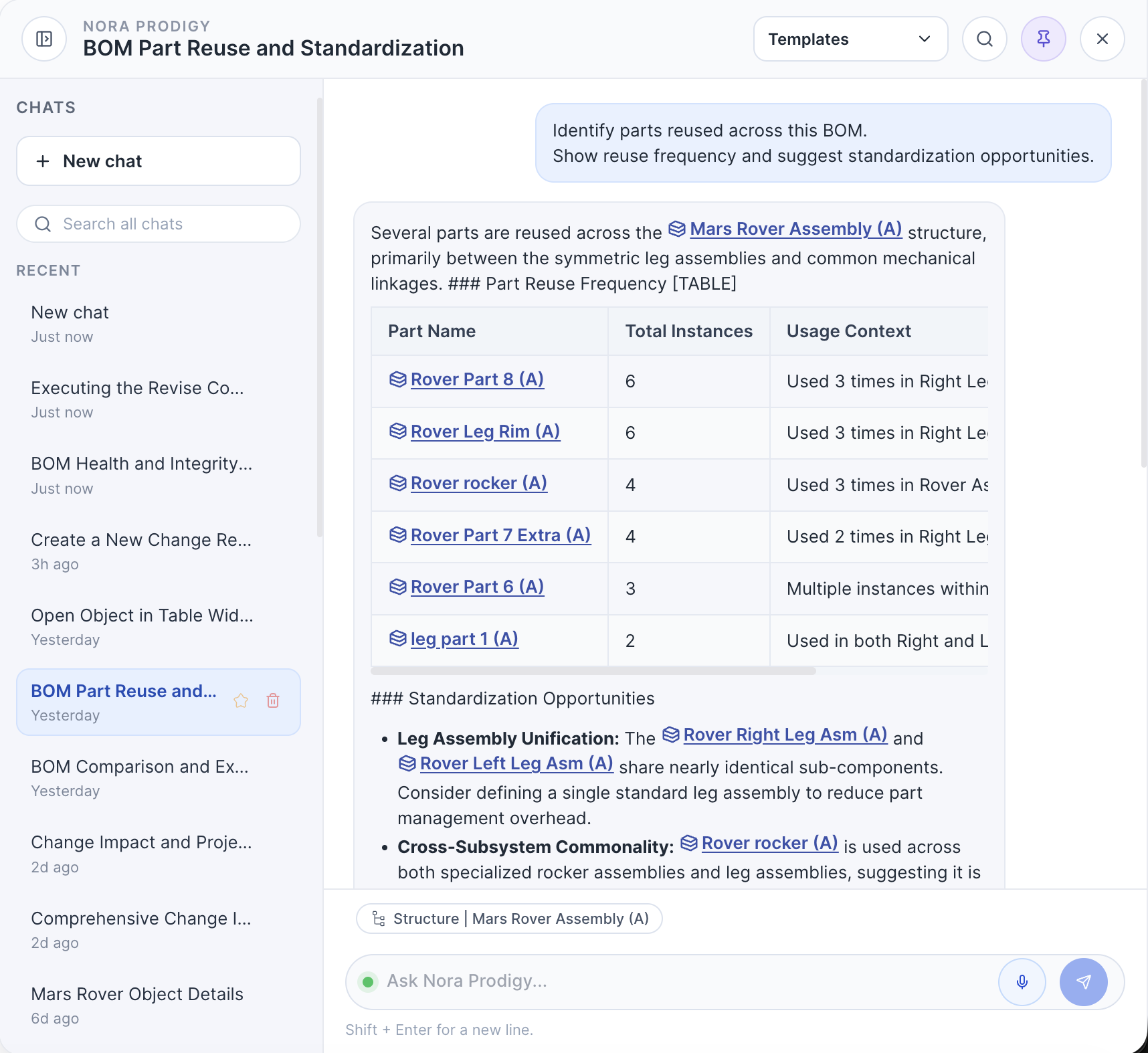
Nora Prima AI · Phase 2
Analyze the active product context and prepare structured recommendations with human review built in.
- Identify part reuse and duplication opportunities
- Summarize impacts, risks, and open decisions
- Prepare drafts for controlled user review
 Preview unavailable. Open the full-size image.
Potential outcome: Faster analysis, more consistent decisions, and practical AI support inside governed workflows.
Workflow details and intended users
The next phase of AI in PLM needs to do more than answer general questions. It should understand the product, structure, change, document, or workflow a user is working on and provide useful support without losing governance or traceability.
At Nora IPLM Lab, we are developing Nora Prima AI Phase 2 around focused, context-aware assistance that can analyze product data, surface opportunities, prepare structured outputs, and help users move through controlled PLM workflows.
What we’re working toward
- Work with the active BOM, change, document, project, or product context
- Identify part reuse, duplication, and standardization opportunities
- Summarize change impact, risks, dependencies, and open decisions
- Prepare structured drafts and recommendations for user review
- Keep human approval, source context, and lifecycle traceability visible
- Best for
- Engineering, product-data, change-management, and PLM teams.
- Potential outcomes
- Faster analysis, more consistent decisions, and practical AI support inside governed workflows.
Built around the work.
Tested against reality.
We evaluate usability, technical feasibility, and governance before a concept can become part of the platform.
Every workstream builds on Nora’s product lifecycle management foundation, connecting product context while keeping ownership and approvals visible.
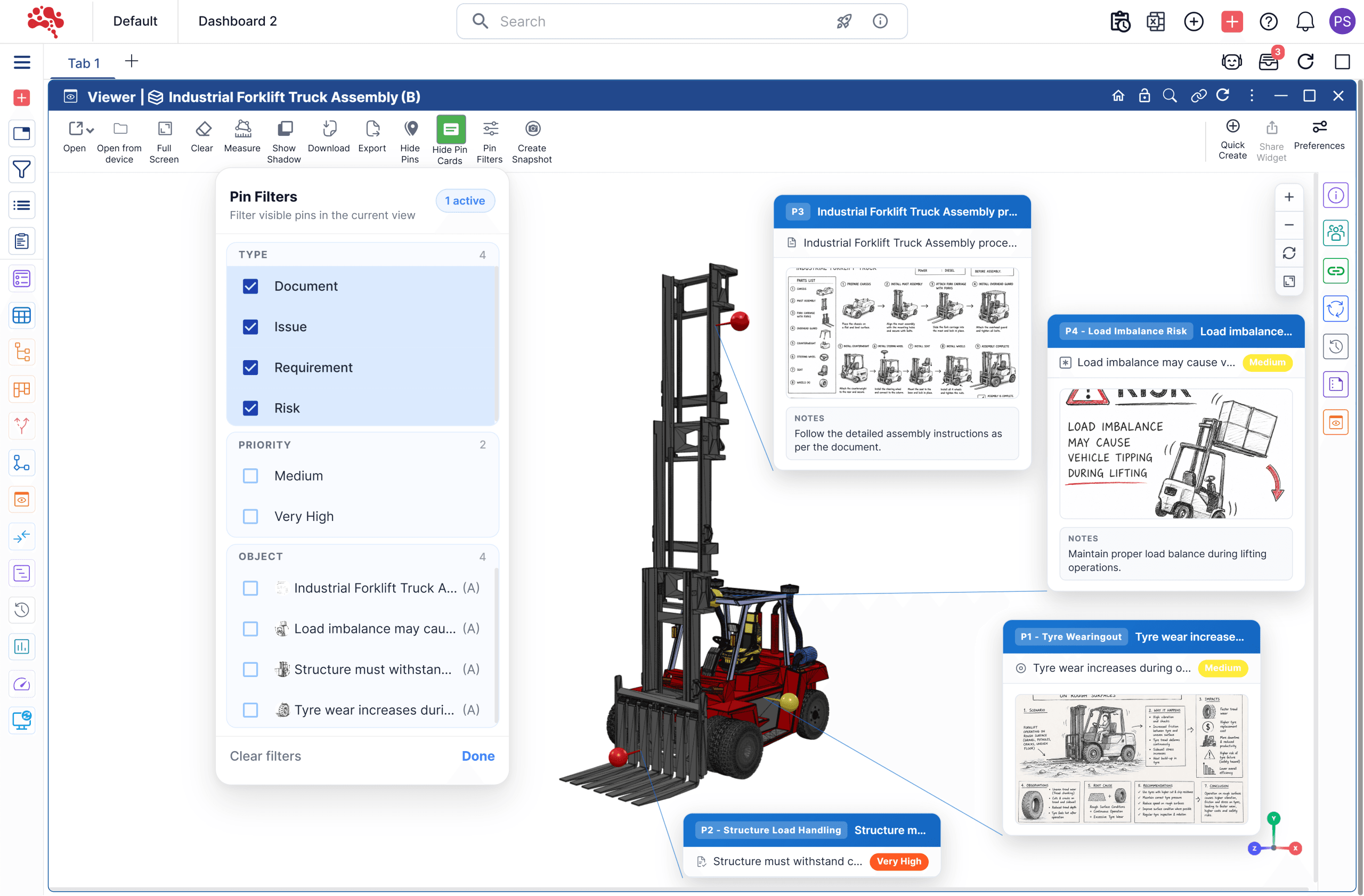
Explore the connected product context
 Preview unavailable. Open the full-size image.
 Preview unavailable. Open the full-size image.
Discover
Understand the workflow, affected teams, and outcome worth improving.
Prototype
Test interactions, data relationships, and technical feasibility.
Validate
Evaluate representative engineering and manufacturing scenarios.
Productize
Refine usability, performance, documentation, and release readiness.
Frequently Asked Questions
What is Nora IPLM Lab?
What is Nora Prima AI Phase 2?
How does Nora IPLM Lab support engineering change management?
What is Knowledge Thread in PLM?
How are MBOM and manufacturing process management different?
What is product configuration management in PLM?
How does Nora IPLM Lab support digital thread initiatives?
Is Nora IPLM Lab a public product roadmap?
Who should provide feedback on Nora IPLM Lab concepts?
What should product work
make easier for you?
Bring your engineering, manufacturing, or product-data challenge to Nora IPLM Lab.