Nora IPLM for Manufacturing Managers
Keep manufacturing aligned with the latest product definition. Connect EBOM and MBOM context, approved changes, supplier information, release status and manufacturing dependencies so your team can prepare production with fewer surprises.
product context
What Manufacturing Managers Struggle With
Manufacturing managers are often asked to execute decisions made upstream in engineering. The challenge is not simply receiving product data. The key is knowing whether that data is complete, approved, current and ready to build.
Late Engineering Changes
A design change can reach manufacturing after planning has already started, creating rework, schedule pressure and confusion about which structure is valid.
EBOM-to-MBOM Misalignment
Engineering and manufacturing structures serve different purposes. When their correspondence is unclear, teams spend time reconciling parts, quantities and assembly intent manually.
Incomplete Release Context
A released item or BOM does not always mean manufacturing is ready. Missing attributes, unresolved decisions, supplier constraints or incomplete downstream data can still block execution.
Supplier and Material Surprises
Lead-time changes, substitutions, availability issues and supplier updates can affect build plans, but their impact is difficult to assess when supplier context is disconnected from product data.
How Nora IPLM Helps Manufacturing Managers
Nora IPLM gives manufacturing managers a connected view of the product information that drives production decisions. Instead of waiting for updates across spreadsheets, emails and separate systems, teams can review engineering structures, manufacturing structures, approved changes, product relationships and readiness signals in one lifecycle context.
Connected EBOM and MBOM Context
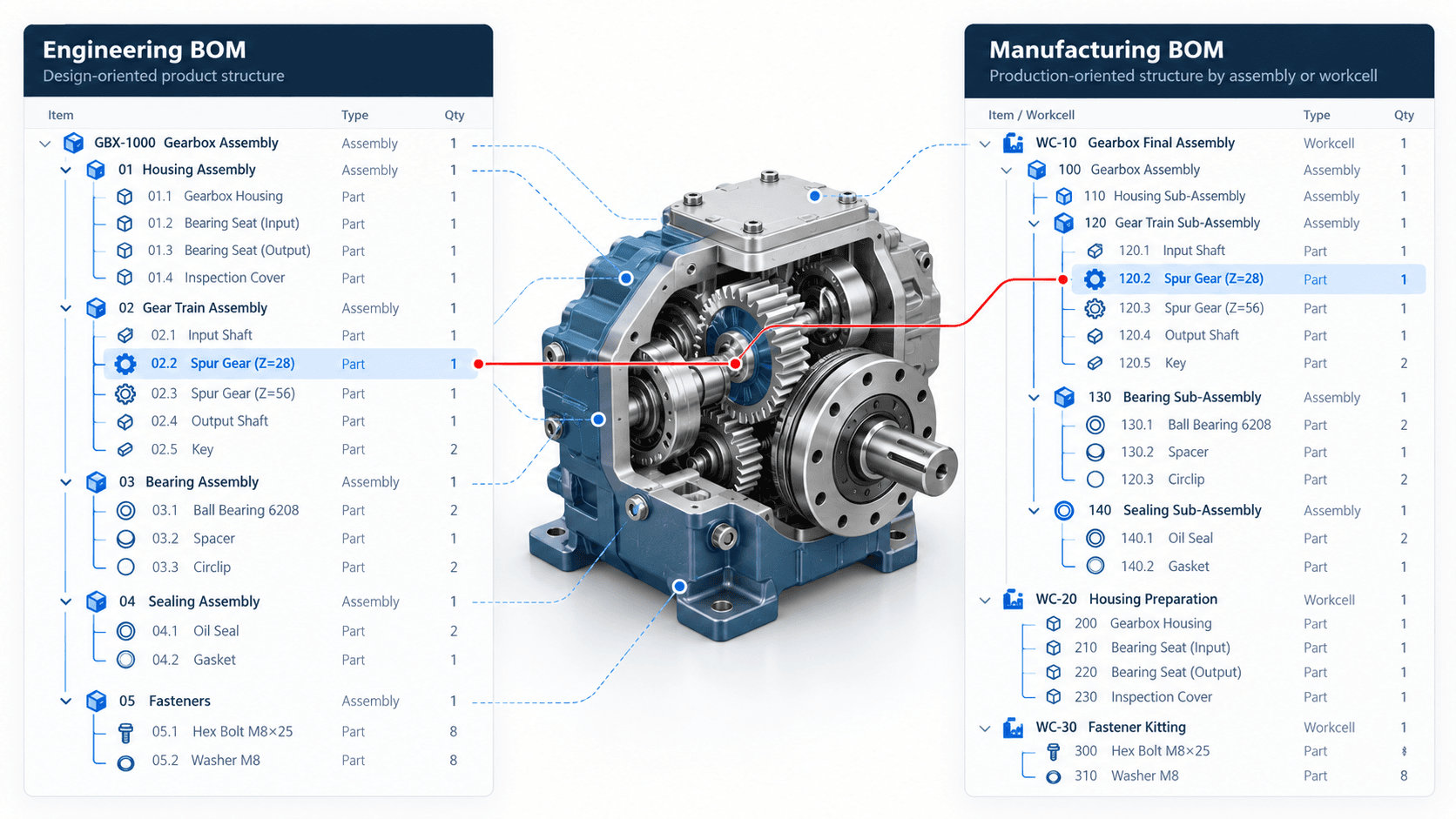
Review engineering and manufacturing structures together so teams can understand how the designed product relates to the manufacturing definition.
Fewer Surprises. Better Production Readiness.
Manufacturing managers need confidence that the product definition they receive can actually move into execution. Nora IPLM connects engineering decisions with manufacturing context so teams can identify gaps earlier, understand what changed and prepare downstream work with a clearer view of readiness.
Key Features for Manufacturing Managers
Manage the manufacturing side of the product lifecycle with connected structures, change context, readiness checks and cross-functional traceability. Each capability is designed to help manufacturing teams understand what is changing, what is approved and what still needs attention before execution.
01MBOM Management
Create and manage manufacturing product structures while keeping their relationship to engineering data visible. Organize manufacturing assemblies, usage context and downstream product information without losing traceability to the source definition. Explore MBOM Management.
02EBOM-to-MBOM Comparison
Review engineering and manufacturing structures side by side to identify missing correspondence, quantity differences, structure changes and unresolved manufacturing relationships. Related BOM Management capabilities keep product structures visible and controlled.
03Change Management
See how engineering changes affect manufacturing structures, items, documents and related execution context before implementation. Keep approvals, affected objects and downstream impact connected. Explore Change Management.
04Baseline and Revision Comparison
Compare product states across milestones and revisions to understand what changed between approved releases and how those differences may affect manufacturing.
05Supplier and Product Context
Connect supplier information, item relationships and product dependencies so teams can evaluate substitutions, availability concerns and material decisions with more context.
06Reporting, Metrics and Readiness Views
Use live product data, status views and reports to monitor open findings, release readiness, change activity and manufacturing-relevant lifecycle information.
Make the Engineering-to-Manufacturing Handoff Easier to Trust
Manufacturing should not have to reconstruct engineering intent after release. Nora IPLM keeps the relationships between product structures, revisions, changes and supporting information visible so manufacturing teams can evaluate what is ready and what still requires attention.
Review the Released Engineering Definition
Start with the latest approved product structure and connected engineering context.
Build or Review the Manufacturing Structure
Organize the product for how it will actually be assembled, sourced or prepared for production.
Check Correspondence and Changes
Review structure relationships, revisions and affected product data to identify gaps or differences.
Confirm Readiness for Downstream Execution
Evaluate outstanding findings, required information and manufacturing dependencies before handoff.
See Manufacturing Impact Before the Shop Floor Does
A change approved in engineering can affect assembly sequence, sourcing, documentation, product configuration and production timing. Manufacturing managers need to see that impact before teams begin working from the new definition.
Nora IPLM connects change context with affected product information so manufacturing teams can review scope, identify dependencies and coordinate implementation with engineering, quality and other stakeholders.
Example: A Supplier-Driven Component Change Before Production
A supplier reports that a component used in an upcoming build is being replaced. Engineering approves an alternate item, but manufacturing still needs to understand where the component is used, which assemblies are affected and whether the manufacturing structure is ready for the substitution.
With Nora IPLM, the affected item can remain connected to its product relationships, engineering change, BOM context and supplier information. Manufacturing reviews the impact, confirms the corresponding manufacturing structure and coordinates the required implementation before the next release.
Built for How Modern Manufacturing Managers Work
Manufacturing managers operate between engineering intent and production reality. Nora IPLM gives them a connected product context for reviewing changes, structures, dependencies and readiness without turning manufacturing teams into manual data coordinators.
Keep engineering, manufacturing, quality, sourcing and product teams aligned around the same product record, while each team works with the information relevant to its role.
Explore More from Nora IPLM
Continue into the manufacturing-relevant capabilities that support connected product structures, controlled changes and lifecycle execution.
MBOM Management
Manage manufacturing product structures and keep the connection to engineering data visible.
Discover Now →02Change Management
Review affected product scope, approvals and implementation context before changes reach downstream execution.
Discover Now →03Product Lifecycle Management
Connect engineering, manufacturing and product information across the lifecycle.
Discover Now →Frequently Asked Questions
Answers to common questions about PLM for manufacturing managers and engineering-to-manufacturing handoff.
How does PLM help manufacturing managers?
PLM gives manufacturing managers connected access to product structures, revisions, changes, documents and lifecycle status so they can make production decisions using the latest governed product context.
What is the difference between an EBOM and an MBOM?
An EBOM represents how a product is engineered, while an MBOM represents how that product will be organized for manufacturing. Manufacturing managers need visibility into both structures and the relationships between them.
How does Nora IPLM support manufacturing release readiness?
Nora IPLM helps teams review product structures, relationships, lifecycle states, change context and available readiness evidence before product information moves into downstream execution.
Can manufacturing managers see engineering changes before production?
Yes. Connected change context gives manufacturing teams earlier visibility into affected items, structures and implementation work so downstream impact can be reviewed before production.
How does Nora IPLM help with EBOM-to-MBOM alignment?
Teams can compare engineering and manufacturing structures, review correspondence between usages and identify gaps or differences that need to be resolved.
Can supplier information be connected to product data?
Yes. Supplier and item relationships can remain connected to the product context, helping manufacturing teams evaluate sourcing and material dependencies when product decisions change.
How does PLM reduce manufacturing rework?
By keeping product structures, revisions, changes and approvals connected, PLM reduces the likelihood that manufacturing teams work from outdated or incomplete product information.
Who should use this manufacturing management workflow?
Manufacturing managers, manufacturing engineers, operations teams, industrialization teams and other leaders responsible for moving approved engineering data into production can benefit from this connected workflow.
Connect Engineering Decisions to Manufacturing Readiness
Give manufacturing teams the product context they need to understand what changed, what is approved and what still needs attention before execution.