EBOM vs MBOM: From Engineering Design to Manufacturing
Compare EBOM and MBOM structures, trace every manufacturing transformation, and keep engineering changes aligned across configurations, plants, and effectivity.
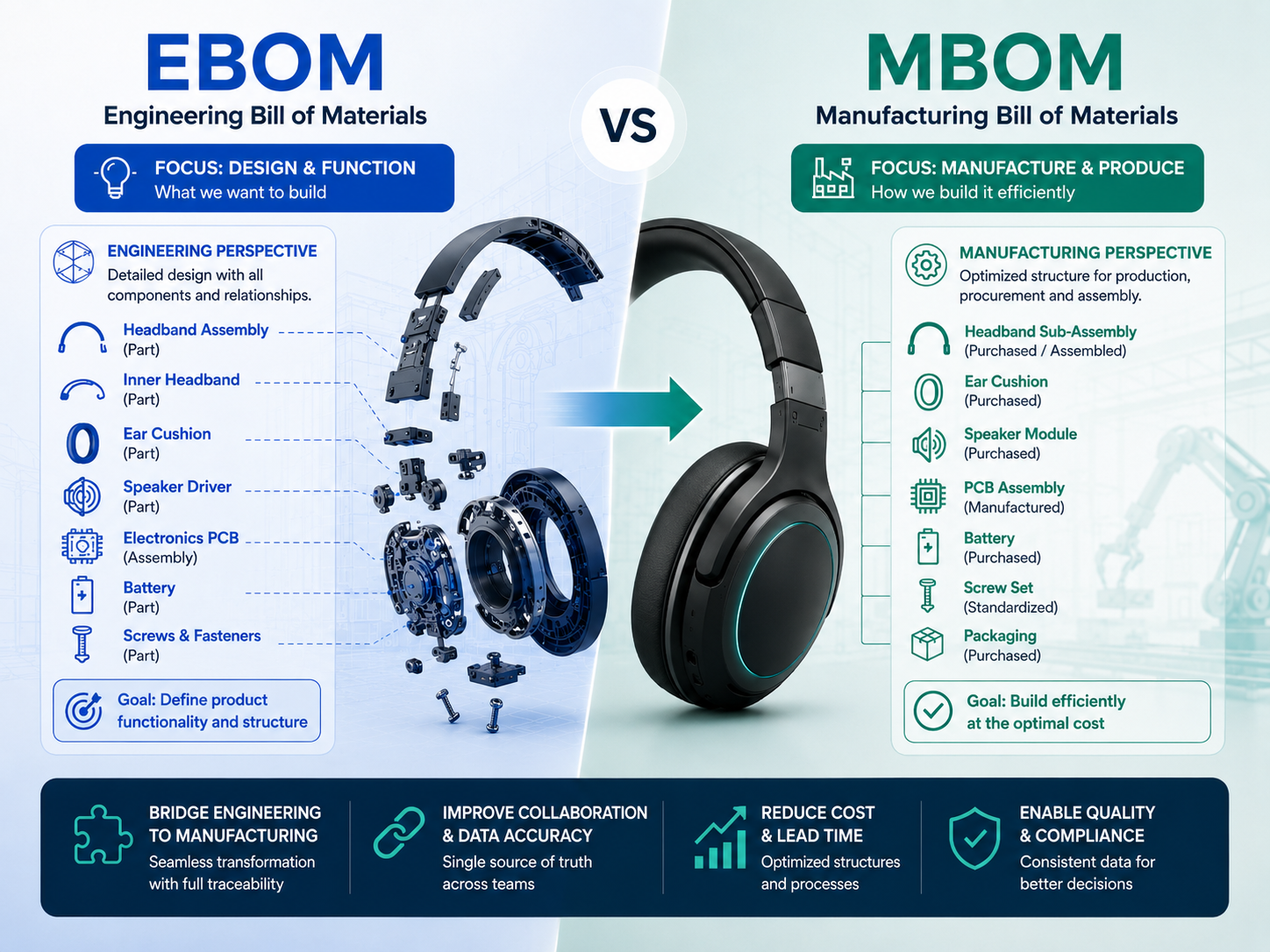
Design intent meets manufacturing reality.
Engineering defines the product as designed. Manufacturing defines how that product will actually be built. Those structures are rarely identical.
Components may be regrouped, relocated, split across manufacturing assemblies, transformed into raw materials, organized into kits, or supplemented with manufacturing-specific items.
Nora IPLM connects the EBOM and MBOM so you understand not only what is different, but how and why engineering has been implemented in manufacturing.
Explore MBOM management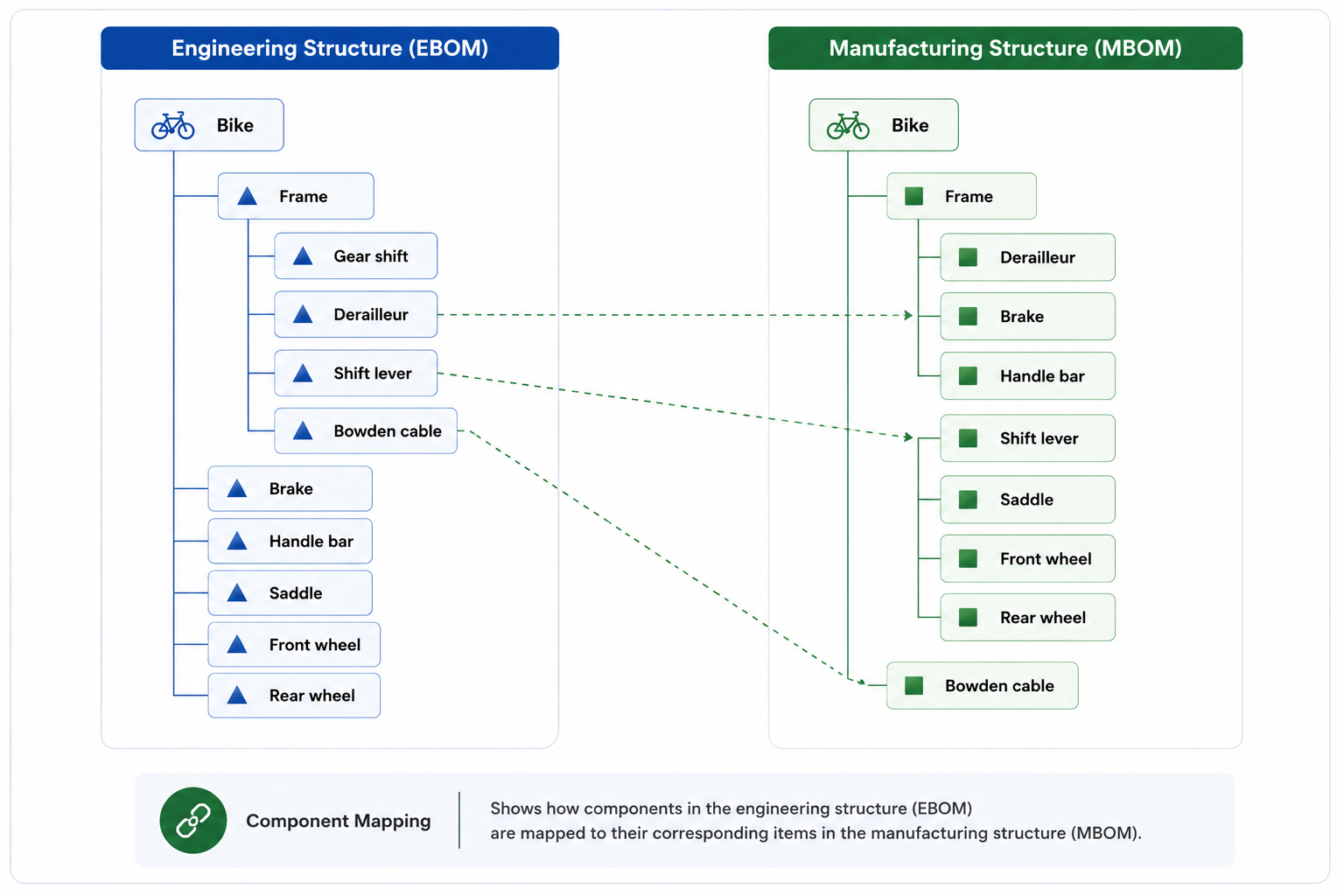
Focus directly on the exceptions that need attention.
Navigate both structures, inspect corresponding items, and understand the implementation status of every item.
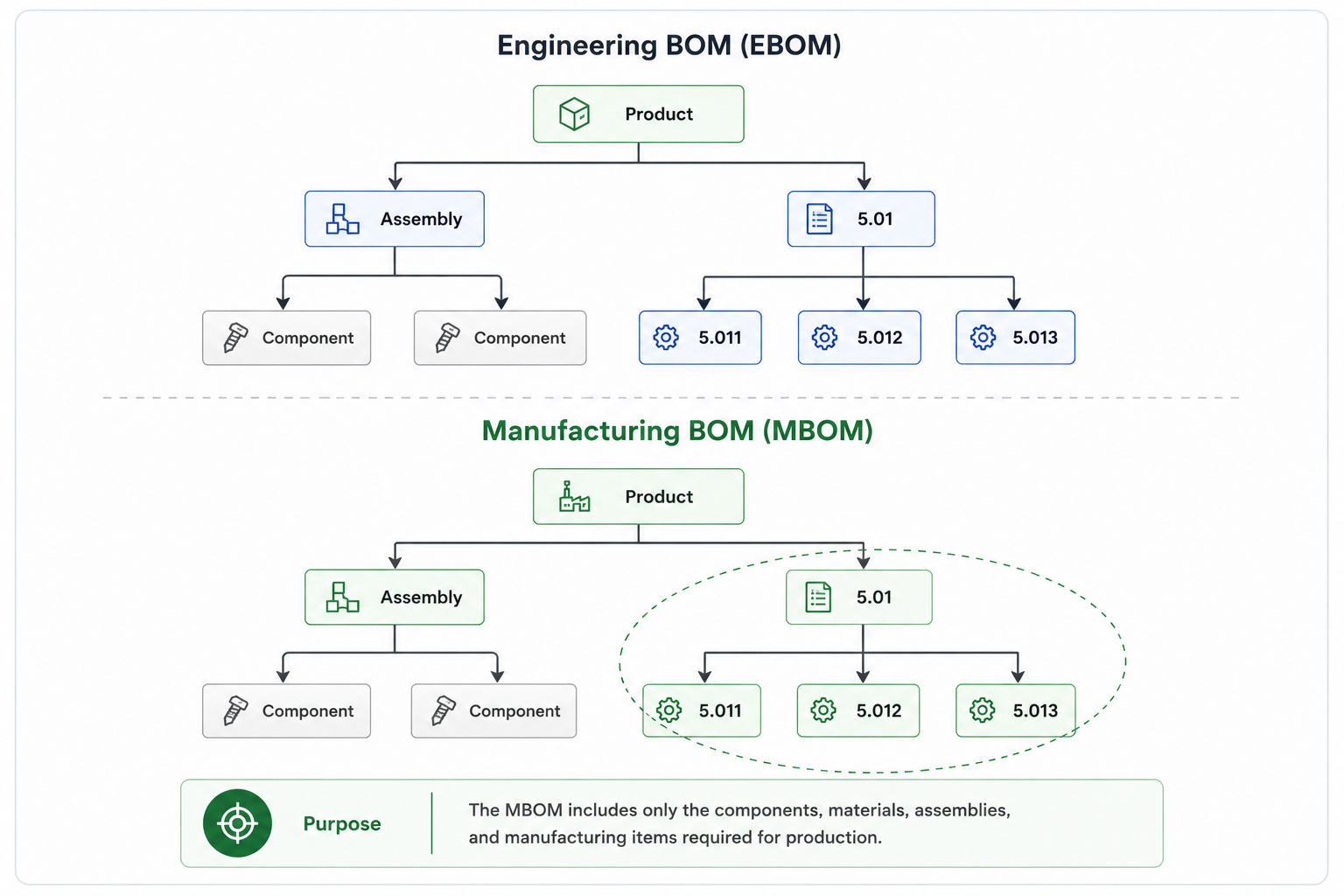
Understand why the structures differ.
Maintain explicit relationships that show how each EBOM item is implemented downstream, without forcing engineering and manufacturing into the same hierarchy.
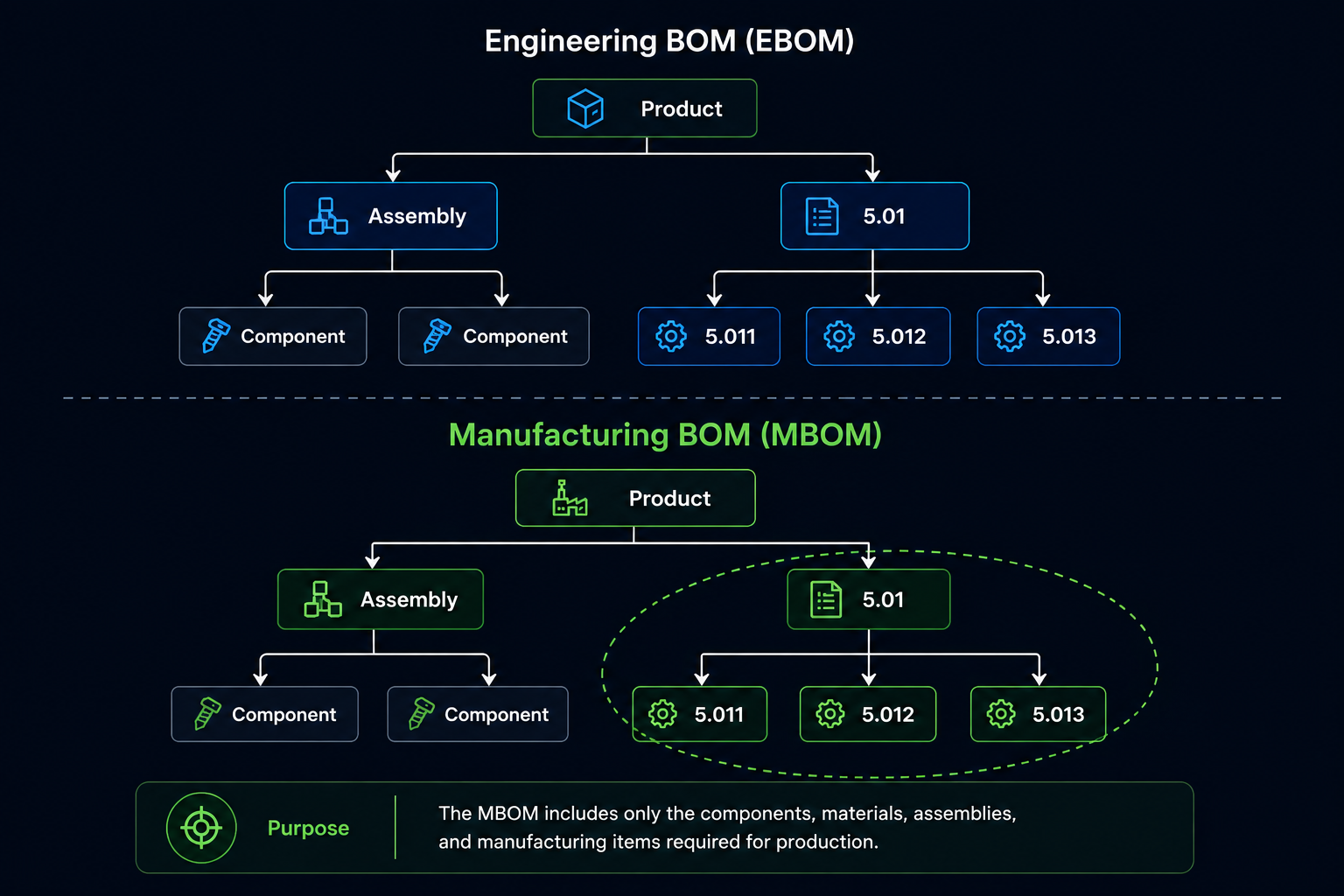
Detect missing, changed, and conflicting implementations.
As products evolve, Nora IPLM surfaces the implementation conditions that manual comparison tends to hide.
Missing implementation
Find engineering items that have not yet been incorporated into the manufacturing structure.
Partial implementation
Identify components or assemblies that are only partially represented downstream.
Structural differences
See where manufacturing has reorganized engineering content for production.
Quantity differences
Detect inconsistencies between engineering requirements and manufacturing usage.
Conflicts and obsolete links
Surface mappings that require review and content that is no longer applicable.
Resolve what matters
Spend less time finding differences and more time resolving the ones that matter.
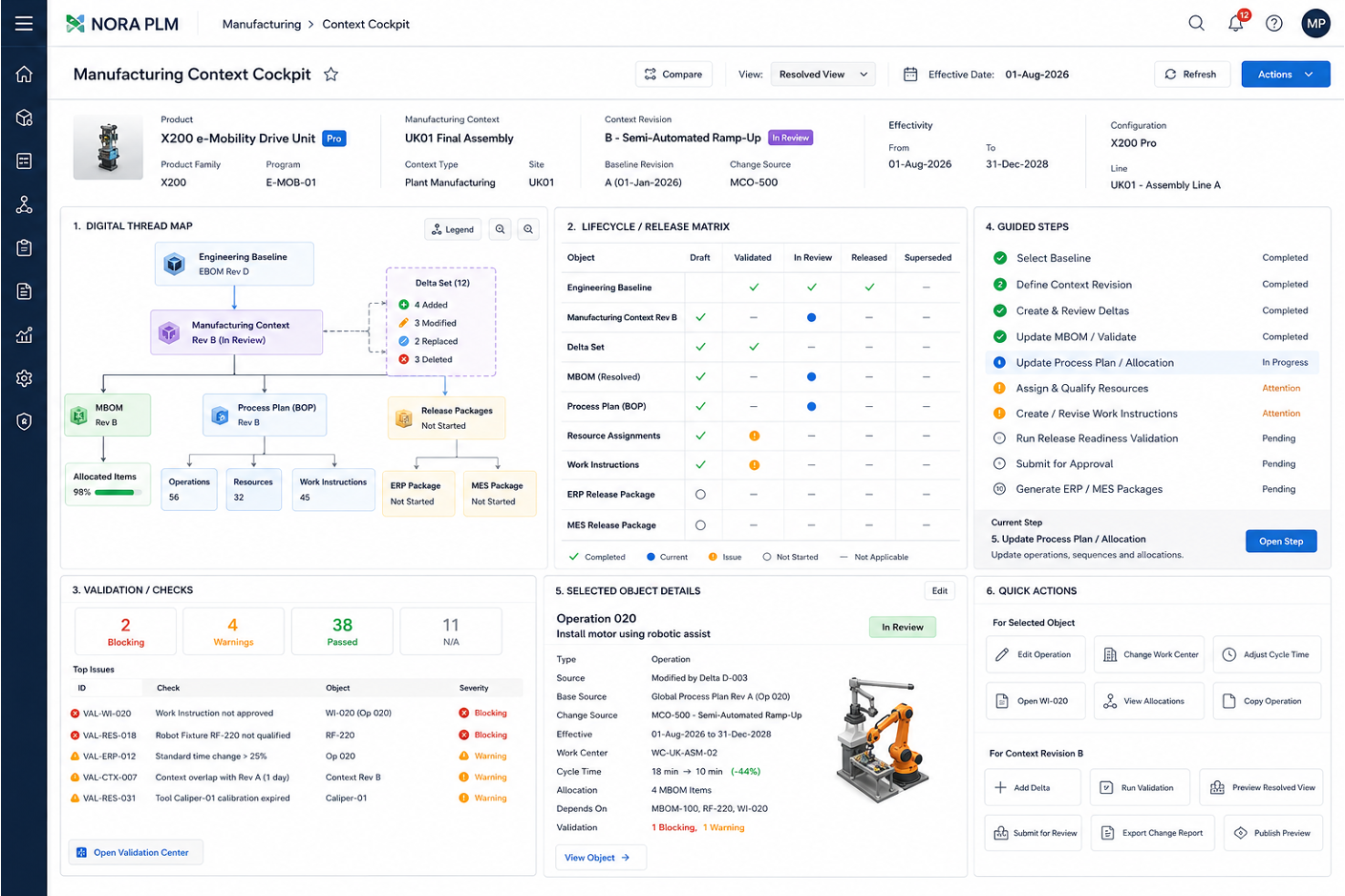
Turn every EBOM change into actionable manufacturing information.
Connected relationships provide the context to identify affected MBOM structures, evaluate their implementation, and see where updates are still missing.
Cooling Cover advanced to Revision C
Geometry and mounting pattern updated in EBOM.
3 linked manufacturing items affected
Two mappings remain valid. One quantity relationship requires review.
Action requiredImplementation reviewed
Station 40 work package updated for the new effective date.
Compare the configuration that actually matters.
A component can be valid in one product configuration and different in another. Evaluate EBOM and MBOM with awareness of variants, revisions, applicability, plant, and effectivity, not as a single static BOM.
From engineering definition to manufacturing reality.
Relationships remain part of the product record, creating a connected digital thread from design through planning and execution.
Capture product structures and design definitions.
Manage the product as designed.
Map, regroup, split, merge, and transform.
Define the product as manufactured.
Prepare controlled data for execution.
A shared environment for both sides of the product.
Compare complex EBOM and MBOM structures
Track implementation status automatically
Maintain explicit EBOM-to-MBOM mappings
Document manufacturing transformations
Assess engineering change impact
Preserve intentional differences across configurations
The essential questions.
An EBOM represents the product as defined by engineering, organized around design, function, assemblies, and engineering intent. An MBOM represents the manufacturing perspective and may reorganize that structure around assembly, plant, sourcing, or production requirements.
Because the structures evolve independently. Comparison identifies missing implementation, structural differences, conflicts, obsolete mappings, and areas affected by engineering changes.
No. Manufacturing may regroup components, introduce kits, flatten assemblies, split structures, or add production-specific content. The essential requirement is traceability, not identical structures.
It is the process of evaluating whether engineering content has been correctly represented in manufacturing, understanding transformations, resolving conflicts, and maintaining alignment as both structures evolve.
PLM provides a controlled environment for product structures, revisions, configurations, relationships, changes, and lifecycle information, preserving the engineering-to-manufacturing connection instead of relying on disconnected files.
Continue the digital thread
Turn the handoff into a controlled, traceable process.
Compare structures, understand manufacturing implementation, and keep product information connected as designs and production requirements evolve.